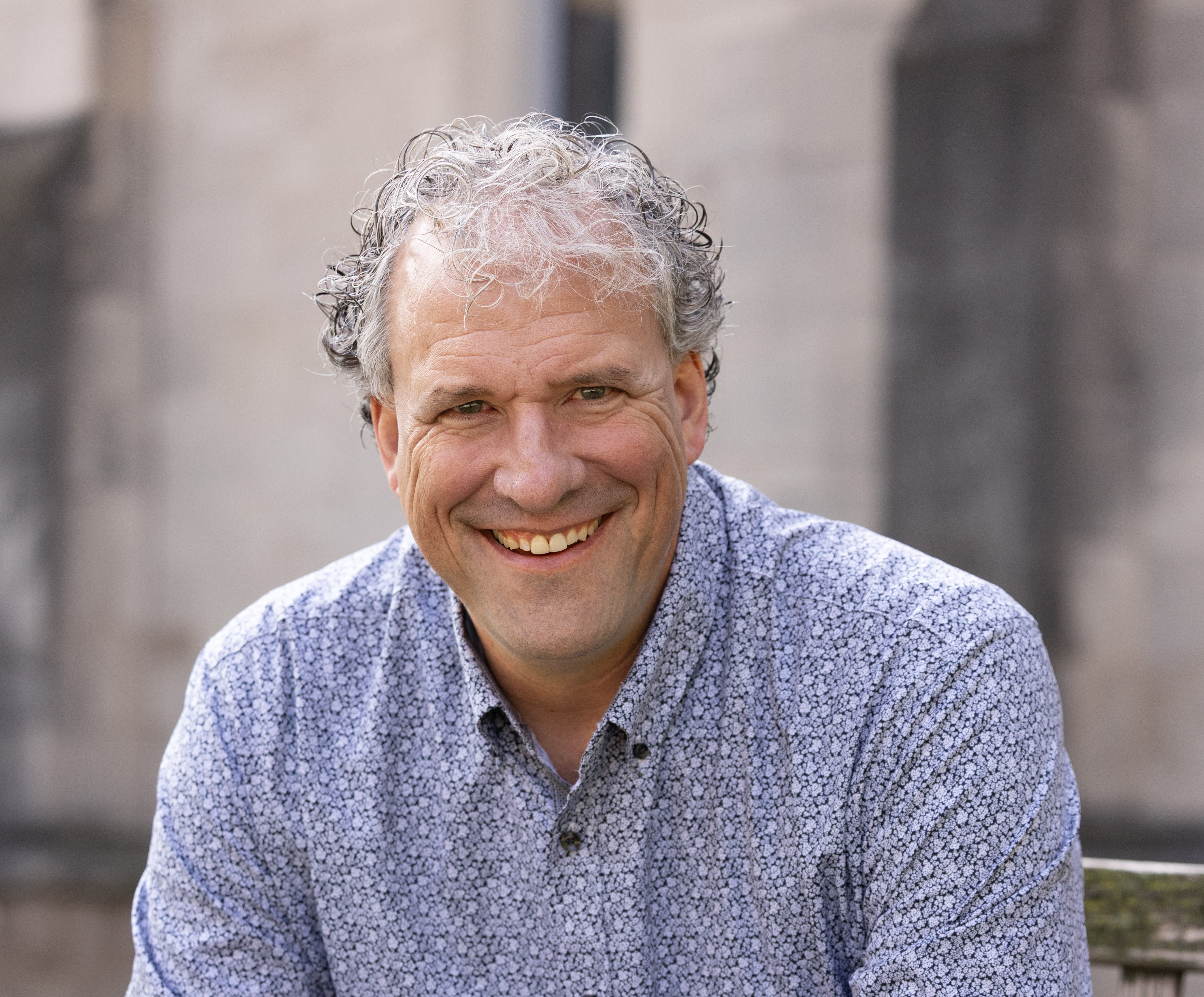
291. Hello, Stranger: Why Curiosity Beats Charisma Every Time
What keeps us from being more social? Nick Epley calls it a “mind-reading mistake.”


 Goodpods
  RSS Feed
 We all think about what others think, particularly what they think about us. The problem, says Nick Epley, is that we’re almost always wrong.
Epley is a professor of behavioral science at the University of Chicago Booth School of Business and author of A Little More Social: How Small Choices Create Unexpected Happiness, Health, and Connection. What keeps people from engaging authentically, connecting deeply, and enjoying a meaningful social life? It comes down to an error of social cognition, “A mind-reading mistake,” Epley says. “If I don't think you want to talk to me, I won't try. And I'll never find out that I'm wrong about that.”
In this episode of Think Fast, Talk Smart, Epley and host Matt Abrahams explore why we hold ourselves back from meaningful conversation, and what happens when we don’t. From taking an interest in others to sharing more freely about ourselves, Epley shares strategies for being a little more social — and making your life considerably better as a result.
To listen to the extended Deep Thinks version of this episode, please visit FasterSmarter.io/premium.
Episode Reference Links:
- Nick Epley
- Nick’s Book: A Little More Social
- Ep.133 From Good to Super: How Supercommunicators Unlock the Language of Connection
Connect:
- Premium Signup >>>> Think Fast Talk Smart Premium
- Email Questions & Feedback >>> hello@fastersmarter.io
- Episode Transcripts >>> Think Fast Talk Smart Website
- Newsletter Signup + English Language Learning >>> FasterSmarter.io
- Think Fast Talk Smart >>> LinkedIn, Instagram, YouTube
- Matt Abrahams >>> LinkedIn
********
Thank you to our sponsors. These partnerships support the ongoing production of the podcast, allowing us to bring it to you at no cost.
This episode is brought to you by Babbel. Think Fast Talk Smart listeners can get started on your language learning journey today- visit Babbel.com/Thinkfast and get up to 55% off your Babbel subscription.
Join our Think Fast Talk Smart Learning Community and become the communicator you want to be.
[00:00:00] Matt Abrahams: One of the biggest barriers to interpersonal communication is our concern that people aren't interested in what we have to say. If we're just a little bit more social, we can dramatically change the impact of our communication. My name's Matt Abrahams, and I teach Strategic Communication at Stanford Graduate School of Business. Welcome to Think Fast Talk Smart, the podcast. Today, I look forward to learning from Nick Epley. Nick is a professor of behavioral science at the University of Chicago Booth School of Business, where he also directs the Roman Family Center for Decision Research. Nick's research focuses on how people make inferences about the minds of others and why we routinely misunderstand each other. His first book is called Mindwise: How We Understand What Others Think, Believe, Feel, and Want, and his latest book is A Little More Social: How Small Choices Create Unexpected Happiness, Health, and Connection. Welcome, Nick. I am so excited to chat with you. You have the distinction of being the person most cited by other guests, from Charles Duhigg to Katy Milkman to Laurie Santos, and I am so glad to finally get a chance to talk to you. Thanks for being here.
[00:01:15] Nick Epley: Yeah. Thank you. That is very flattering. And you should be flattered to know that one of your recent guests, Sonja Lyubomirsky, also said, who she does a lot of podcasts, said this was one of the favorite that she'd done.
[00:01:24] Matt Abrahams: Well, that's very kind of Sonja. We've known each other a long time, and we had a great conversation. So shall we get started?
[00:01:30] Nick Epley: Yes, absolutely.
[00:01:31] Matt Abrahams: So in your book Mindwise, you discuss how we are fundamentally overconfident in our ability to read other people's minds. We often rely on what you call outside perspective, things like the way people use their bodies, facial expressions, to really figure out what someone is thinking. Why is this the wrong approach? Why are we ineffective, and how can we get better using what you call the inside perspective?
[00:01:56] Nick Epley: So the thing that really makes us stand out on the planet as a species, at least from a psychologist's perspective, is our ability to think about other people. Much of our neural capacity here, this fat part of our brain up above our eyes, is dedicated to social cognition, thinking about other thinking people. The problem is that other people's minds are the most complicated things you will ever think about, and so we're imperfect. We're imperfect, though, in predictable ways. One question we can then ask is, how do we overcome these mistakes that we make? One common approach is to just try to pay attention to other people's body language.
[00:02:31] The problem we find with that, or that many psychologists find with that, is that bodies can often mislead. It's easy to lie to people or, or deceive other people in ways that are hard to detect. We're often barely above chance, for instance, at being able to detect whether somebody is telling us the truth or lying to us. So body language doesn't work actually that well, or reading body language. Sometimes we can try to put ourselves in other people's shoes. We find in our research that doesn't actually increase accuracy a whole bunch. You're still playing with things that are in your own head. You're not gaining new insight.
[00:03:02] Perspective taking isn't quite the magical elixir for understanding that we might imagine. The only way that we have found for people to understand the minds of other people better is to, wait for it, ask them what they are thinking. Now, I remember when we started running these experiments, that is, I actually have to get on your inside. I have to ask you what you're thinking. To be good at understanding another person, you have to become a good journalist, it turns out. A good interrogator. When we first started running these experiments in my lab, we referred to these as the stupid studies, that obviously asking somebody what they think is gonna give you more insight into what's on their mind.
[00:03:43] But what was interesting to us was that people didn't seem to know that they were actually using a good strategy when they were using it. So we had people engaging in perspective taking, thought they were doing just as well, just as accurate understanding the mind of another person as people who were directly asking another person what they thought about something. And that was what was interesting to us. Using this most effective strategy from people's own perspectives didn't seem to be something that they are, were aware was actually helping them out as much as it was.
[00:04:15] Matt Abrahams: I want to dive deeper into this notion of, you said perspective taking doesn't really work, and I know you've done a lot of work on what you call perspective getting. Clearly, asking is one way to get another person's perspective. Can you define what you mean by perspective getting, and what are some tools that we can use, especially in high-stake situations where reading the room and understanding somebody else's likely response could be really helpful to us?
[00:04:39] Nick Epley: All we mean by perspective getting is just an analog to the psychological process of perspective taking. And we didn't mean anything magical by it when we came up with the term. In fact, it's hardly the kind of thing that even needs a term. Psychologists for decades have been studying what happens when we do this little bit of mental gymnastics to move from my perspective to yours, to try to see things from your point of view, try to understand things from your perspective, recognizing that you might see the world differently than I do. To be clear, doing that does a lot of things psychologically for us. It makes me feel more similar to you. It makes me feel more empathy towards you. It makes me feel like I understand you better when I do this.
[00:05:23] The problem is, when I actually ask people to predict what you're thinking and you write down what you're actually thinking, people, perspective taking doesn't actually make people, we found in a series of 25 experiments, doesn't actually make people more accurate. If anything, it made people a little bit worse. So by perspective getting, all we mean is simply asking other people questions directly about what they might think about something. In a negotiation, you could ask somebody directly, "Look, I really wanna understand what you want in this situation, what your position is." You might be worried that they might not tell you, but you can ask.
[00:05:57] You might wanna know, for instance, what your spouse wants for Christmas or for a birthday, right? Instead of guessing, it turns out the best way to know is to ask them, and they tend to be just as happy getting the gift that they wanted when you ask them as when you guessed and got the wrong one. They're not so happy about that. So what can you do in a high-stakes situation? I think the big thing, one thing we're finding out in recent research, is that people are often reluctant to ask direct questions. They feel like it's being too nosy, it's being impolite, it's being intrusive, and so they're reluctant to ask the questions they would need to actually understand another person.
[00:06:36] In our research, we find that people think it's gonna be awkward to ask somebody a direct question about what they believe about some topic, particularly if it's a personally relevant or meaningful topic. But people who are asked those questions, even sensitive ones, so this is work by Einav Hart and Maurice Schweitzer, for instance, they find that people think it's gonna be much more awkward to ask somebody direct questions than the person actually finds it to be. When you ask somebody a direct question, they typically don't mind as much as you would guess. So I think that's the big thing. In a high-stakes situation, just ask the question you want to know the answer to.
[00:07:14] Matt Abrahams: I'm hearing a theme that asking is very important. So my question for you is, what makes for a good question? On the show, when people have said open questions better than closed questions, do you have recommendations for what are questions that can give you insight perhaps over other questions?
[00:07:31] Nick Epley: So one of the things that I'm most interested about in my work is trying to understand why we don't do the social things that are necessarily good for us, why we don't communicate in the ways that would otherwise be good for us, creating connections with other people, allowing us to understand them better, and so on. What are the barriers that keep us from doing it? And a big one is just misunderstanding how other people will respond. So for me, the best kinds of questions to ask somebody are the meaningful ones, meaningful questions, deep questions that ask about somebody's thoughts or their beliefs or their attitudes or their feelings.
[00:08:05] In conversation, these are the kinds of things we often wanna be talking about with somebody, and yet these are also the things that we're often reluctant to ask people about. And so we spend a lot of time in conversation, say, or even when communicating with other people, talking about shallow, superficial things that don't really enable understanding, don't really enable as much understanding as it could, and don't allow us to connect with other people as meaningfully as we otherwise could. So for me, the questions that are of most interest to ask are the deep ones, and the ones that we're often overly reluctant to ask people about.
[00:08:41] Matt Abrahams: Absolutely. And you can think about some of those in advance, right? You can stockpile some questions. We've talked with Alison Wood Brooks and others about how we can leverage questions to build more connection, trust, and intimacy with people. Do you have advice or guidance on how to move from those shallow conversations into more meaningful ones? I might feel very uncomfortable starting by asking you a very deep question right off the bat. How do we migrate from the more shallow to the deeper questions?
[00:09:12] Nick Epley: Much faster than you think you can. You might not ask that your first question, but I usually can get to something meaningful by question number two, if I'm trying. And I think that's a thing that people really misunderstand in conversation. Usually, that transition for me moves from talking about something or asking about something early on that's on the outside of a person, "What do you do for a living? Where do you live?" to something that's very quickly on the inside of a person. And that often involves a shift from asking about what might be happening to asking about why or some deeper meaning.
[00:09:47] So, you know, once I find out what you do for a living, I can ask you, "Why, why do you do that and not something else?" Or I can ask what you do for a living, and I can ask as a follow-up question, "Is that always what you wanted to do? Is this your dream job? Do you have your dream job right now?" And if they say yes, then you can now ask, "Why is that your dream job?" And if they say no, you can ask, "Well, what is your dream job?" And already there, on like the third question, I've gotten to somebody's dreams. It just doesn't take that long.
[00:10:13] Matt Abrahams: I like that distinction of going from what to why, and it's really important to put an exclamation point at the end of what you said, is that while we feel it might be awkward, in actuality it's not that awkward.
[00:10:27] Nick Epley: What we found was creating the barrier, why people didn't wanna talk, was that people didn't think that others were interested in talking to them. And that's also what keeps people from having the deep, meaningful kind of conversations we'd like to be having with each other, too. We find that people think that others aren't gonna care about the stuff that they have to share, the meaningful things that they would have to share in conversation, the sense that other people don't want to be bothered with this or wouldn't be interested in having this conversation, and turns out we're off about that.
[00:10:58] Matt Abrahams: Wow. So it's our fear that the other person just doesn't care or wanna be burdened with our stuff is what gets in the way.
[00:11:06] Nick Epley: It's not that we misunderstand ourselves. We know in our experiments people recognize that if you had a conversation with somebody, if you shared something meaningful about yourself, people would enjoy their experience more if they were in a conversation than if they were being ignored by other people. But what keeps them from doing it is a social cognition error, a mind-reading mistake, is that I think you don't wanna talk to me, and of course, if I don't think you wanna talk to me, I won't try, and I'll never find out that I'm wrong about that.
[00:11:33] Matt Abrahams: And your research shows that when you do actually initiate the conversation, there are wonderful benefits from it. People vary. A lot of the work I have done is with people who are highly anxious in communicating, introverts, extroverts. How can somebody who might be nervous, a non-native speaker, for example, or somebody who's just extremely shy or introverted, how do you encourage them to take advantage of this wonderful benefit of talking to people and reaching out?
[00:12:00] Nick Epley: So I empathize with this very much because I was one time there. That is, I now can stand up in front of 1,000 people without any trouble and give a speech, and we're academics. We do this for a living. When I was in graduate school, I was horrified by the thought of standing up and presenting in public. I was horrified about the thought of taking questions, so I very much can empathize with the challenges that come from opening up and reaching out. The long-run answer is that you overcome mistaken fears through practice. That's it, is you learn that these are mistaken by exposing yourself to them and learning the truth of the matter.
[00:12:39] In fact, cognitive behavioral therapists, psychologists who treat clinical levels of anxiety, the way they do this is through what's known as exposure therapy, where they put you in the very situation that you are anxious about. Now, exposure therapy doesn't work for everything, but if your concern is about talking to people, as social stuff, those anxieties tend to be misplaced. So putting yourself in those situations is the step that you need to calibrate your beliefs. Now, how do you do that? What I recommend to people is doing a choice audit of your day. Just think over the course of your day, like your day tomorrow.
[00:13:11] And, you know, you might think about a moment where you could engage with somebody. It'd be easy. It wouldn't be hard, right? Where you could reach out and engage with somebody. It wouldn't take a lot of time, wouldn't take a lot of effort, wouldn't take a lot of energy, and start there. Sometimes these can be really simple things, like when I enter the University of Chicago Business School where I work, the Harper Center here, I've got about a 200-yard walk up to my office where I'm standing right now, and I have taken on as a habit making that a hello walk.
[00:13:40] So I've done this very deliberately. Like, I had this realization one morning that I kind of walk into the office, head down, on my way, not wanting to bother anybody, and I decided to do something different, right? There was a moment where I was choosing to ignore people, and I could do something different. So now when I come in, I have my head up, I'm smiling. Now, that seems small. It is small. A lot of these things are small. Saying hello to somebody on the train one morning. You're there. You're not doing anything anyway. It's easy, relatively speaking. It's not particularly hard. It's not risky, and that's the place to start.
[00:14:15] What we're talking about here is a behavior change. The way you change behavior over the long run is you don't do it all at once. You're not gonna overcome anxiety all at once. It's, you don't move a mountain by pushing the whole thing at one time. You move a mountain shovel by shovel, bit by bit. And so my advice to folks who are nervous about this is you don't have to believe me. You don't have to believe our data. You can go out and test this yourself, and my suggestion is to start small. Pick a little thing you can do that's pretty easy. Give somebody a compliment. Say hello to somebody in the morning. Do it multiple times so you get some data, and that's where you start.
[00:14:52] Matt Abrahams: So many things there that you said are so valuable and insightful. One, I would never have believed that you were shy and nervous about speaking. You come off as quite the extrovert and very comfortable. This idea of doing a choice audit to think about where those opportunities are for those little experiments that you're talking about, and I am certainly going to try, and I encourage everybody listening to try, a hello walk and see what happens as we go.
[00:15:17] Your new book is called A Little More Social. It's not be social. It's not jump into the deep end of social. Talk to me about the thesis of A Little More Social. Tell me a little bit more about why you used a little bit more and what it's about.
[00:15:33] Nick Epley: The book is trying to reconcile what seems like a fundamental paradox that sits right at the core of human life to me, which is that we're highly social animals. We're made happier and healthier by reaching out and connecting with other people. And yet that choice to reach out and engage with somebody, to approach them, or to hold back and avoid them, that dynamic shows up, that choice shows up in so many different parts of our lives, right? So do I talk with a stranger? Do I type to them or pick up the phone and call them, right? Once I'm talking, do I go deep or do I stay in the shallow end of the pool? I've got a kind thought, do I share it? I feel grateful to somebody, do I express it? I need help, do I ask for it? I've got this thing about myself that I'd like to share with my partner, but I'm a little nervous about being honest, so I keep my true self to myself.
[00:16:21] Over and over again, there are these opportunities we have to reach out and engage with others in positive, meaningful ways that make our lives better that we're often nervous about doing. And what we find just over and over and over and over again is that avoidance voice, that, that voice we have on our shoulder that's telling us, "They're not gonna like that. This is gonna be bad. I shouldn't do this," is a little too strong. And people consistently underestimate how positively these interactions are going to go, and as a result, I think, are overly reluctant to reach out and engage with other people. Now, we're not idiots. Nobody is confused that reaching out and expressing gratitude to your old high school band director, which I did not long ago, Craig Aune is his name, one of the best teachers that I've ever seen in my life, nobody's confused that doing that is gonna be negative, right?
[00:17:09] We can distinguish between a pat on the back and a punch in the face. This, we're not confused about this, right? But what we do find is that even when we think it's gonna be a little good, we still underestimate how positive these things are likely to be. We're a little bit off. So our data don't suggest you should go out to talk to everybody all the time. You got things to do, right? They don't suggest you should dive into the deep end of the conversation pool with everybody all the time or spend your life writing gratitude letters. That's not what it suggests. It suggests that your estimate, your belief about how this social interaction, this attempt to reach out and engage with somebody's gonna go, is off a bit.
[00:17:47] And all of life is a gamble. All of life's a gamble on the outcomes our, of our decisions and our choices, and our data suggests that we're a little off about that. And as a result, there are probably lots of social interactions that you could have, but you're mistakenly choosing not to have. And finding those decision points where, you know, that avoidance voice is just a little too strong in your life, that's the margin you have for improving it, for making your life better. And again, the title of the book comes from what I think is the real implication of our work, not that you should be a nonstop extrovert talking to other people all the time, but that there are choices you're making to avoid people that are often mistaken, and that you could be a little bit more social and it would make your life probably considerably better.
[00:18:34] Matt Abrahams: I am absolutely convinced, and as somebody who's read the book, you do a great job of helping articulate that point of view. You know, Nick, I knew this was gonna be wonderful because everybody, your resume came to me as, "Oh, my goodness, it's gonna be a great conversation." I don't wanna bring it to an end, but we will. Before we end, I ask three questions, two questions I ask everybody, one I come up with just for you. Are you ready for these?
[00:18:57] Nick Epley: I'm ready.
[00:18:58] Matt Abrahams: You teach an MBA course called Designing a Good Life. What is one communication-based design flaw you see most high-achieving people make, and how can we change it to be better?
[00:19:11] Nick Epley: I think a big design flaw is people focus too much on their competency and too little on their warmth. What other people care about when they interact with us, is this person trustworthy? Is this person honest? Are they kind? Are they a friend, or are they somebody I should avoid? We spend a lot of time thinking about, what exactly should I say to communicate to this person? That's a good second thing to pay attention to because that's what they're paying attention to second. But the first thing they're paying attention to is, is this person warm? Are they a friend? And I think that's a mistake. We overestimate the importance of competency, exactly what we're communicating when we're communicating, when really what matters a lot, first and foremost, is, is this person warm? Is this person trustworthy? That's the thing to start with.
[00:19:57] Matt Abrahams: Thank you for echoing that. In the strategic communication class I teach, that is the very first topic we discuss, and we talk about lead with warmth, follow with competence, and that can make a big difference. Thank you for sharing. Who's a communicator that you admire, and why?
[00:20:13] Nick Epley: The person who popped into my mind, and it's possible that it's 'cause I was just listening to a podcast from him, is Michael Lewis. And I think Michael Lewis is amazing as a communicator because he has this stroke of genius that makes him seem not like a genius. And I think that's where true genius sits. So a really good communicator, and I think this is true in academia as well, is somebody who can take really complicated topics, like the financial sector or Kahneman and Tversky's research in the behavioral sciences, and make it so simple that it feels like you understood it already.
[00:20:47] Like, not very hard, okay? And Lewis is just a master, both in writing as well as in speaking, so he's just as good on his podcast as he is with his books. The other thing that Lewis does which is great as a communicator, he's extremely good at asking questions. He's really good about not imposing what he thinks on somebody else, but rather letting the other person share their wisdom and pulling that out of them. He's a good perspective getter. Really good perspective getter. And that's why he gets the nod from me today.
[00:21:21] Matt Abrahams: Not surprising that you would pick somebody who asks good questions, given what you do in your research. And the other notion that you started with, I call accessibility, how you make complex ideas accessible to somebody. And I like that you added, "So that they feel like they already knew it." I know exactly what you're talking about, and really effective communicators do that. All right, Nick, final question, question three. What are the first three ingredients that go into a successful communication recipe?
[00:21:48] Nick Epley: So I think the first big one is to take an interest. A lot of good communication is about the mindset you take to it. In a conversation, this is particularly true, I think, if you're communicating in conversation, is you gotta take an interest in the other person, in getting to know them. People spend a lot of time focusing on specific words to use or specific sentences or phrases. I think that will get you potentially over the hump to start something. But what makes for a really good conversation is for you to be flexible in the moment. If I take an interest in getting to know you, the stuff to talk about is just gonna come up. I'm gonna think about it often if I start with that.
[00:22:24] So I think being in the right mindset, taking an interest in, understand somebody, getting to know them, making sure they understand you, I think is critical. If you're not interested, you're not gonna teach them, you're not gonna reach them. Second one is warmth. We already talked about this a little bit. Again, I think this is one thing that people under-emphasize, and this is suggested by the research, that what we tend to think about when we think about ourselves is our competency, right? I'm gonna stand up and I'm gonna give a speech, right? I'm gonna, or I'm gonna speak in class, or I'm gonna have a conversation with you, or I'm gonna write a gratitude letter, right?
[00:22:55] What I'm worried about, I'm not concerned about whether I'm trustworthy or not. I take that for granted with myself. What I'm worried about is, what the heck am I gonna say, right? That's what I'm really focused on. But what other people focus on when they see us is, is this somebody trustworthy? So warmth is a big one. I think that's the second. And then the third one, I think, is openness. Really good communicators are open about themselves. People who are willing to share things about themselves, be open about themselves, that builds trust very quickly. So a good way to really have a deep, meaningful conversation with somebody isn't just about asking them meaningful questions.
[00:23:34] It's also about being willing to be open and share meaningful things about yourself, right? The fact that 20 years or so ago, when I started my career, was a terrified introvert, at least when it came to standing up and speaking, sharing that story. I lost 20 pounds before my first job interview. I was so nervous. I didn't sleep, I didn't eat for weeks. I was terrified by this. Being willing to be open and share those meaningful stories allows other people to open up with you, too, and that's what makes for a really good conversation and communication.
[00:24:02] Matt Abrahams: That reciprocity there is really important in building trust. So the three I hear you talk about are mindset, which drives interest and the flexibility needed to engage, and then that warmth rather than over-indexing on competency, and then finally, being open and divulge and share information. Nick, this was fantastic. You were so helpful in illuminating the good work that you're doing and helping all of us to feel better In our communication and the challenge that you bring to us, which is to take that step, initiate the conversation, be a little bit more social, and you can see the benefits. Thank you for your time.
[00:24:42] Nick Epley: Thank you so much, Matt.
[00:24:45] Matt Abrahams: Thank you for joining us for another episode of Think Fast Talk Smart, the podcast. To learn more about how to leverage communication for deeper relationships, listen to episode 133 with Charles Duhigg. This episode was produced by Katherine Reed, Ryan Campos, and me, Matt Abrahams. Our music is from Floyd Wonder, with special thanks to the Podium Podcast Company. Please find us on YouTube and wherever you get your podcasts. Be sure to subscribe and rate us. Also, follow us on LinkedIn, TikTok, and Instagram. And check out fastersmarter.io for deep dive videos, English language learning content, and our newsletter. Please consider joining our Think Fast Talk Smart Learning Community at fastersmarter.io/learning. You'll find video lessons, learning quests, discussion boards, my AI coach, and book club opportunities. Again, that's fastersmarter.io/learning to become part of our Think Fast Talk Smart Learning Community.