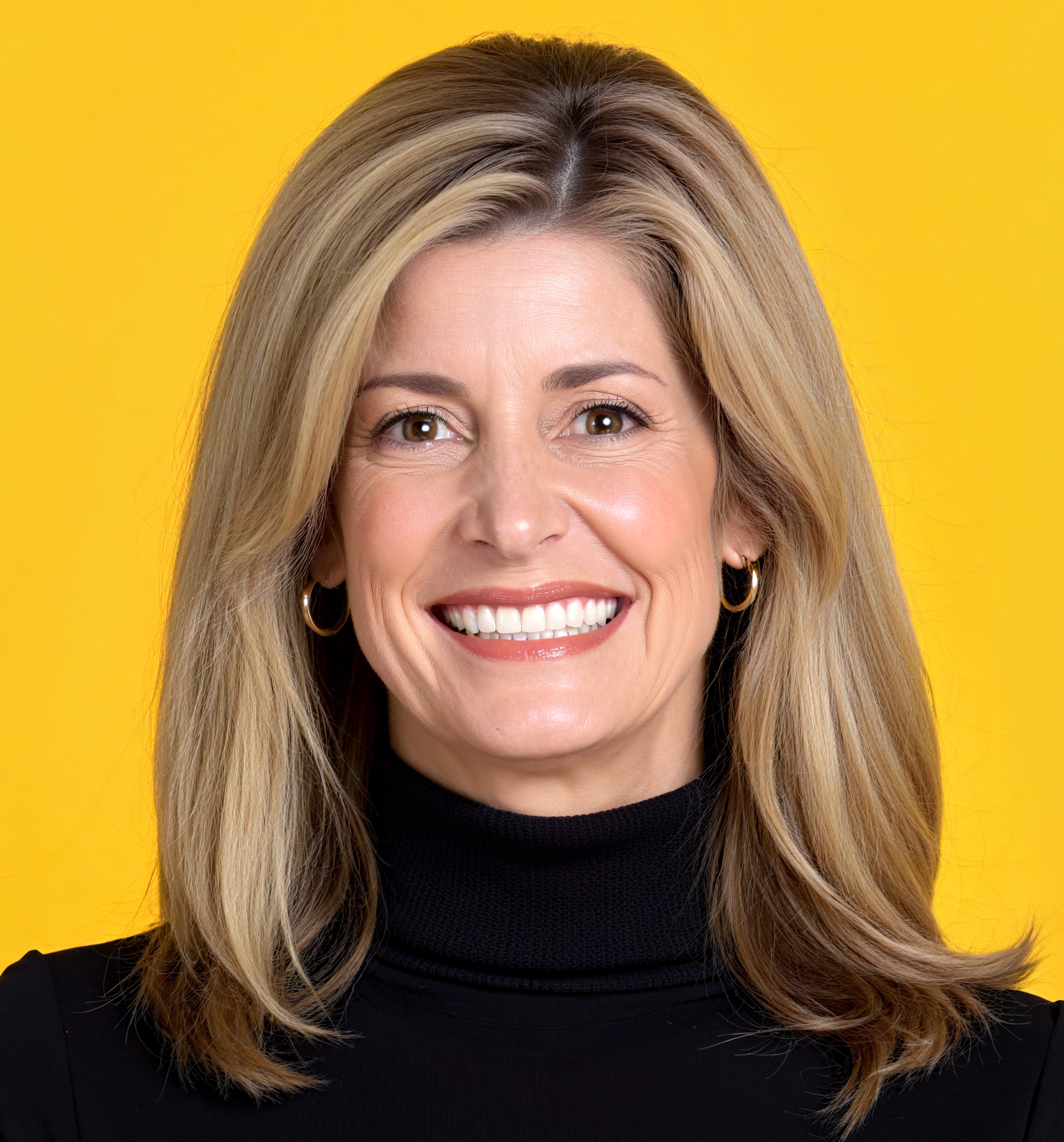
289. Better with Age: Why Joy Matters More Than Longevity

A full life isn’t about the quantity of time, but the quality.


 RSS Feed
 Our lifespan might describe how long we live, but it doesn’t say anything about how well we live. For that, Kerry Burnight says, we need a different measure: joyspan.
Burnight is a gerontologist, former professor of geriatric medicine, and author of Joyspan: The Art and Science of Thriving in Life's Second Half. In her decades working with older adults, she noticed a gap: “I would have a lot of people who lived long lives and were in pretty darn good physical health. They were miserable.” That observation led her to dig into the research on well-being — and to find what it takes to enjoy a long life, not just endure one.
In this episode of Think Fast, Talk Smart, Burnight joins host Matt Abrahams to explore her joyspan framework, explaining how growth, connection, adapting, and giving contribute to a full life. From changing the conversation around aging to communicating more effectively across generations, Burnight offers practical wisdom for living better at any age.
Episode Reference Links:
- Dr. Kerry Burnight
- Kerry’s Book: Joyspan
- Ep.176 From Stereotypes to Synergy: Communicating Across Generations
Connect:
- Premium Signup >>>> Think Fast Talk Smart Premium
- Email Questions & Feedback >>> hello@fastersmarter.io
- Episode Transcripts >>> Think Fast Talk Smart Website
- Newsletter Signup + English Language Learning >>> FasterSmarter.io
- Think Fast Talk Smart >>> LinkedIn, Instagram, YouTube
- Matt Abrahams >>> LinkedIn
********
Thank you to our sponsors. These partnerships support the ongoing production of the podcast, allowing us to bring it to you at no cost.
Strawberry.me. Get 50% off your first coaching session today at Strawberry.me/smart
Join our Think Fast Talk Smart Learning Community and become the communicator you want to be.
[00:00:00] Matt Abrahams: A truly fulfilling and meaningful life is not just about lifespan, it's about joyspan. My name is Matt Abrahams, and I teach Strategic Communication at Stanford Graduate School of Business. Welcome to Think Fast Talk Smart, the podcast. Today, I am really excited to chat with Kerry Burnight. Kerry is a world renowned gerontologist and advocate for the elderly, who has spent over 20 years improving the lives of older adults. She is a former professor of geriatric medicine at the University of California, Irvine, and currently at the University of Chicago. She specializes in using technology and compassionate communication to change how society values and interacts with elders. Her latest book is called Joyspan: The Art and Science of Thriving in Life's Second Half. Welcome, Kerry. Thank you so much for being here. We have friends in common, and I am so thrilled to actually be talking to you in person, not just via text and on the phone.
[00:00:57] Kerry Burnight: Oh, well, as a listener of your podcast, I feel especially excited.
[00:01:02] Matt Abrahams: Well, thank you. Shall we get started?
[00:01:03] Kerry Burnight: Please.
[00:01:05] Matt Abrahams: I would love to start with the concept of joyspan. What is it, and how is it different from lifespan and healthspan?
[00:01:12] Kerry Burnight: As a gerontologist, I spent the last 30 years talking about lifespan, how long we live. And it's a good start. But more recently, in the 1980s, we have added the concept of healthspan, which has been really helpful because you want to live as healthy as you can for as long as you can, physically and cognitively. The problem was I would have a lot of people I would work with who lived long lives and were in pretty darn good physical health and were miserable. So then the question is: why is it that some people are enjoying these long lives and some people are suffering so much? So I really dug into the literature on wellbeing, which I know is one of your interests, and what I learned was there's so much that we can be doing to impact the quality of our long lives.
[00:02:03] So joyspan is simply how many years you enjoy living. And it's a biggie, and joy is often not clearly defined, so I wanted to start with that because what joy is not is toxic positivity, happy, happy, pretend things aren't hard, because growing older is hard. There's a lot of challenges. I don't know anybody who escapes all the challenges of growing older. But joy, as defined by the American Psychological Association, is well-being and life satisfaction. And I love that Desmond Tutu and the Dalai Lama wrote a book called The Book of Joy, which is such a good book. And they really differentiate between happiness and joy. So happiness being often circumstantial or outside in, whereas joy is more akin to contentment and being able to feel some well-being regardless of circumstance. And that's when I knew I had my word joyspan because it is the regardless of circumstance that we're after.
[00:03:12] Matt Abrahams: Really interesting. So it's not about the context, it's about the internal perspective. You know, and people who listen and watch know, that I love words. And a word like joyspan is one that's very inviting and makes people curious, and I think that opens them up to learning the, the many things you have to share. Speaking of sharing, you have created a joyspan matrix, which consists of four components, grow, connect, adapt, and give. And in your awesome book, you dedicate a chapter to each. So I know we won't do it justice in just this brief conversation, but can you give us a little bit of an overview of those four components?
[00:03:46] Kerry Burnight: Yes. I just scoured the literature on wellbeing in longevity. Why, why, why some people from the outside have the same health conditions, the same socioeconomic status, the same exercise, eating, and yet such different experience. And what I found was there were these, they grouped into four elements, and I spent a ridiculous amount of wasted time trying to make a cute acronym. And one day I was just sitting in my coffee shop where I write and I thought, in this occasion, it is just the words that it is. So it is four words that the listeners can take to heart, and they're all verbs because they all take action. They take effort.
[00:04:31] And there is a little way to remember them, and it starts and ends with a G, so there are G's on the outside. And then I, the author, happen to be from California, so there's CA in the middle. So we're gonna start with the G, and that first is grow. So what the literature shows us, that those people who enjoy their long lives, who age well, are people who are committed to continue to develop themselves. So as younger people, we're all the time saying, "Matt, climb up on the diving board. Do this, do that." Things you've never done. As we get older, understandably, sometimes we lean out.
[00:05:12] And the reason for it is that we have been programmed through a multi-billion dollar anti-aging industry telling us that it is bad to get old, it is ugly, it is less than, you're, you don't have as much to give. And because of that, we then are not leaning in to keep growing. But the reality is there are many things that get better as you get older, and we'll probably get into that later because it's not publicized, because it's not lucrative. So we started with grow, continuing to keep going. Next, we're going to the C, and that's connect. So we know from the literature that connection between humans is a non-negotiable, regardless of how introverted you are.
[00:05:58] You can be lonely in a marriage or in a group, or you can be fulfilled, but we require some back and forth, and that we simply can't rest on the oars of longtime friendships because when you, like my patients, live into your 90s, you outlive your friends, or they move away, or they have cognitive impairment. The sentence I use here is to be that friend who picks up the phone, who remembers it's been two years since your father's passing, who says, "May I drive you to chemo?" Who says, "I'm making a book club, do you want to join?" You got to put yourself out there.
[00:06:35] Matt Abrahams: And proactive and persistent.
[00:06:37] Kerry Burnight: Yes. Then brings us to the third. We've got grow, connect. The A is adapt. So that literature was actually out of a researcher in Israel who found that people who could enjoy their long lives were people who could adapt. Because,
[00:06:55] Matt Abrahams: Right. So not set in your ways.
[00:06:57] Kerry Burnight: Not set in your ways, but also recognizing that circumstances are going to come regardless of all your burpees and green juices and plunges, and all the things we're doing. There will be changes, and they're not things you necessarily anticipate. Even things, for example, when I was writing the chapter on adaptation, our 25-year-old daughter was diagnosed with a brain tumor, and it was devastating because I thought, well, that can't possibly be. And then here I'm writing about adapting. I was like, no, that is life. Another word for aging is living, and you're going to have these things come your way that you didn't expect. And when they do, not if they do, when they do, how we adjust to those is what predicts how we will experience our long life, and indeed how we'll be remembered.
[00:07:51] So this ability to adapt to these things that you never asked for really matters. And then gets to our final G, and that is give. And so there's a big literature around purpose and contribution. And again, when we recognize all that we have to give as we get older, and we reject the notion that we have less to give, we recognize the world needs what older Matt, older Kerry have to offer. For example, as we get older, we have the potential for increased problem-solving, increased appreciation of connection, increased and deepening spirituality, appreciation of beauty, humility. I mean, can you imagine if we all step up and lean into our humility, what this would do as a nation? So society needs us to give what this older version has to offer.
[00:08:48] Matt Abrahams: So these four together make the joyspan matrix. And we can work on each of these components to help us build and appreciate our joyspan. I have to ask, is your daughter okay?
[00:09:01] Kerry Burnight: Yes. Thank you for asking. So she was packed up to go to medical school, got this diagnosis. We were all devastated, and she wasn't able to then go because she then instead moved home and was on the patient side instead of on the doctor side. And as life does, we adapted, and she adapted. And so now she has an MRI every six months. She went to a different school that's next to her neurosurgeon. She's gotten used to some of the side effects. So did we pick it? No. Is it life and there's still so much goodness? Yes. So thank you. She's doing just fine.
[00:09:42] Matt Abrahams: I'm glad to hear that, and what an example of adapting. And speaking of examples, one of the things that was so touching about your book is with each of those four areas, you not only explain them, but you use a person, a real person, and walk through how they are realizing and actualizing that. And one of the things that brought a smile to my face is you use your own mother, who is in her 90s, as an example as well. As you were writing, I just want to get a little meta about your thought process, why did you decide to tell personal stories of people to help understand these concepts? Because it really helped me to get it.
[00:10:21] Kerry Burnight: Yes. People love aspirational examples, and we have that in other parts of our lives. We look ahead to our professors, and yet we haven't traditionally had as many role models so readily available. But now, happily, with things like social media and a recognition from this beauty industry that there is great beauty in so many of us. And so with my mom, it was such, it's a mutual learning. And so she'll be 97 next month, and she wasn't particularly fitness guru. She didn't eat perfect. She had a cocktail and a dessert most nights, and she wasn't even on a path that was particularly great.
[00:11:08] But happily, as I, 30 years ago, would learn things in my studies, I would say, "Oh, Mom, did you know that something as simple as doing a gratitude journal can statistically change da, da, da?" So she started incorporating these things, and now I'm the one always learning from her because she is the best version of herself right now. She is vital, hilarious, humble, beautiful, radiant, and I, I felt I couldn't keep her to myself, so I started sharing her on social media, and now millions and millions of people are watching her. And what they always say is, "I want to be like her." And what I type back is, "You can." It isn't accurate that aging is just something that happens to you.
[00:11:58] In fact, the research shows us that between 14 and 25% of how you will age is genetic. So the rest, we have something that we can do both with our physical, what we do moving these bodies, continuing to learn. But a lot of the emphasis right now is the exterior, the meat bag, the carrying case. And it does matter, but I'd never go to a funeral and have people say, "Did you know that guy's VO2 max? It was really impressive." They say things like, "Wow, when nobody was looking, he mentored me. He took me to the side, and he gave me a shot." A lot of these interior things that end up being the biggies in life.
[00:12:44] Matt Abrahams: Wow, the power of stories to motivate, and I love that you've made your mom a social influencer, and that she's embraced it. And how lovely to be able to teach her and have her teach you simultaneously.
[00:12:55] Kerry Burnight: Oh, she teaches me so much. So just yesterday, I was at her house, and I had the thought, "She doesn't complain." And she did, she used to years ago when she was only in her 50s. And so I said, "How is it that you don't complain?" And I just, in one shot, turned my camera on her, and she talked about how she just inside her mind says, "Oh, Betty, knock it off." And so then there have been thousands of people who have laughed, "Oh, Betty, knock it off."
[00:13:23] Matt Abrahams: Another technique that you use in your writing, which I love because I am a quote collector, you use lots of quotes, and some of my favorite quotes in your work are quotes you had. And one that really stood out to me is, "Your habits have more power to shape your health than your genes ever will." And you've talked a little bit about the percentages there. But can you give us some insight into what are those habits, and are there habits that we should adopt for mind, body, and spirit, and connection?
[00:13:49] Kerry Burnight: Yes. And the step one that I want you to adopt today is how you think about growing older. Because most of us, understandably, see it as all decline, and we've been taught that, and to think, name something, it's gonna go downhill. Well, when you expect that, that is really what happens.
[00:14:12] Matt Abrahams: It's a self-fulfilling prophecy.
[00:14:14] Kerry Burnight: The problem is it simply isn't true. So I think in terms of ways that you could make a difference in your own aging is to just today say, "Every time I hear my internalized ageism," so I think of it, we all talk about AI, this is IA. For example, you can't find your car for a moment in the parking lot and you think, "Oh, there it is. I'm losing it." No, you couldn't find your car when you were 23. And so you could replace that thought with, "Don't be silly. It's not an aging thing." Or when you say to yourself, "It's too late," or I say to myself, for example, I'll be looking at my phone, and it will flip around, and I'll see like 25,000 chins under here. And my first reaction is like, "Oh, no." And then I think, of course, I'm in my late 50s. That's what necks do. It's no personal shame. It's not a tragedy. It's not ugly. It's okay.
[00:15:11] And it's so liberating to combat our internalized ageism. And nobody's gonna do it for us. So a 20-year-old is not going to go, "Ah-ha, growing older is..." It needs to come from us, those who are aging. And so, for example, I work with a lot of people in their 80s and 90s, and some younger people think it's such a compliment to say, "Oh, Matt, you don't even look like you're 85." The thing is, we've already been young. The goal is not to stay young. So what we say now is when people say, "You don't look 85," you say, "This is what 85 looks like." Or they say, "You don't even seem old." I want to lean into it because that's how we're going to revolutionize and change aging, as a new longevity. It's a new way to maximize all 100 years.
[00:16:03] Matt Abrahams: I really like that approach, and I appreciate the specifics there because I find myself saying some very similar things.
[00:16:08] Kerry Burnight: We all do. I do, too. And there's no way we couldn't, because ever since you were a little boy, they read you a story and said, "Hansel and Gretel went out, and this old witch with a long nose was going to eat them." And that was our introduction to old.
[00:16:25] Matt Abrahams: My mother is in her late 80s, and I'll say, "Hey, you're doing great for somebody in your 80s," and she hates that last part, and it reminds me to stop saying it. Kerry, I knew this was going to be a great conversation. It certainly has been. I'd like to end with three questions, as you know, as a listener, the first one I'm going to make up just for you. The other two I ask everybody. You up for that?
[00:16:43] Kerry Burnight: Yes.
[00:16:43] Matt Abrahams: Excellent. I'm really curious. As somebody who's studied joy and joyspan, what is the one thing that you have found in your own life that has really made a difference in your experience of joy and do you think is setting you on the path to having a healthy, long joyspan?
[00:17:02] Kerry Burnight: If I had to summarize it in one word, it would be choice, that we have a choice in how we live and experience these long lives, even if we lose our vision, even if we are confined to bed, even if when our partners pass away, we have a choice in how we respond to those. So that's like Viktor Frankl's Man's Search for Meaning, where he says, "The one thing that we have..." Here he was in a concentration camp, and he said, "We can choose that spiritual freedom of how we respond." I just, I find that so comforting.
[00:17:40] Matt Abrahams: Thank you for that. It's very empowering, and I appreciate you choosing choice as your answer. Question number two, who's a communicator that you admire and why?
[00:17:49] Kerry Burnight: I am a big fan these days of Helen Mirren, who is an actress who is leaning into being beautiful and radiant and strong and irreverent in her 80s. And when people say, "You're young," she'll say, "No, I'm not, and I don't wanna be. I've been young. I'm old." And to use those words to take back, that it can be absolutely, it's our definition of what it means, and that it's not... And when if somebody says you look old, that is not an insult, or you don't have to take it as such. And it's not a compliment to say you look good for your age. You just, you look good, and who cares even how you look? But I, when Helen Mirren speaks, I listen.
[00:18:39] Matt Abrahams: Absolutely. Not only is she a phenomenal actress, she's got a wonderful resonant voice, and I love that she is adopting what you said, choice. She's making choices to really lean into her age and her profession.
[00:18:49] Kerry Burnight: And she's changing it for people who come behind us, and that's something that we can do for our children, is that we can change, I'm seeing it in my lifetime because in the beginning when I, 30 years ago, it was people sitting in wheelchairs in the hall, slumped all the way over with loud TVs blaring nonsense, and it's not. We're changing that. And so within our lifetimes, we're changing and how great we can set it up for our kids and grandkids.
[00:19:20] Matt Abrahams: Absolutely. Absolutely. My wife and I are making conscious choices to help make sure our kids see their grandparents aging, but also our aging, so they can see what that's like and the choices they can make. Final question. What are the first three ingredients that go into a successful communication recipe?
[00:19:37] Kerry Burnight: Okay. Could I change it to do a successful communication recipe when you're working with older adults?
[00:19:44] Matt Abrahams: You may do that. Absolutely. Again, making a bold choice. But yes, please.
[00:19:49] Kerry Burnight: So the first is listen. Close your mouth for a minute and slow down and listen. The second is particularly if you, like me, you have a higher voice, to lower your voice. We lose hearing in our higher register. So what happens is I'm talking to somebody, and to make it louder, I come higher, then they really can't hear me. Go a little bit lower down here. And so I do this with my patients of, "It's great to see you today, Mrs. Jones. How are you?" I don't have to go louder. I can just go lower. And then the third component is to always be eye level with people who are older because this thing of standing up above and leaning over down to somebody's chair or wheelchair, it doesn't set up the right vibe. So if you can, just to get to face to face, and then we can hear better, we can read lips, we can connect better face to face.
[00:20:55] Matt Abrahams: The three Ls, I love it. Uh, listen, lower your voice, and get to that level. And I think that's advice that, that transcends any communication. I really like that idea of lowering your voice, being conscious of not just what I'm saying, but how I say it can really help somebody.
[00:21:12] Kerry Burnight: Yes. My husband has a very deep voice, and occasionally I can't get to the place that I need to, and so I'll just quietly say to him, and then he says the same thing, and the person can understand completely.
[00:21:27] Matt Abrahams: Kerry, this has been fantastic. Not only have you taught us tips and tools that we can use when working with people who are older, but you've also shared with us things we can do to increase our joyspan and really make the best of the lives that we have. And the communication advice transcends age. It's all about just how to connect and be present. Thank you so much.
[00:21:46] Kerry Burnight: Well, thank you so much.
[00:21:49] Matt Abrahams: Thank you for joining us for another episode of Think Fast Talk Smart, the podcast. To learn more about aging and communication, please listen to episode 176 with Bob McCann. Because Kerry provided so many useful tips, tools, and techniques, we created a Quick Thinks episode with more of her advice and guidance. Check it out. This episode was produced by Katherine Reed, Ryan Campos, and me, Matt Abrahams. Our music is from Floyd Wonder, with special thanks to Podium Podcast Company. Please find us on YouTube and wherever you get your podcasts. Be sure to subscribe and rate us. Also, follow us on LinkedIn, TikTok, and Instagram. And check out fastersmarter.io for deep dive videos, English language learning content, and our newsletter. Please consider joining our Think Fast Talk Smart Learning Community at fastersmarter.io/learning. You'll find video lessons, learning quests, discussion boards, an AI coach, and book club opportunities. Again, that's fastersmarter.io/learning to become part of our Think Fast Talk Smart Learning Community.