287. Give It a Rest to Do Your Best: The Sleep Habits That Catalyze Your Communication

If you want to do your best, you’d better get your rest.


 RSS Feed
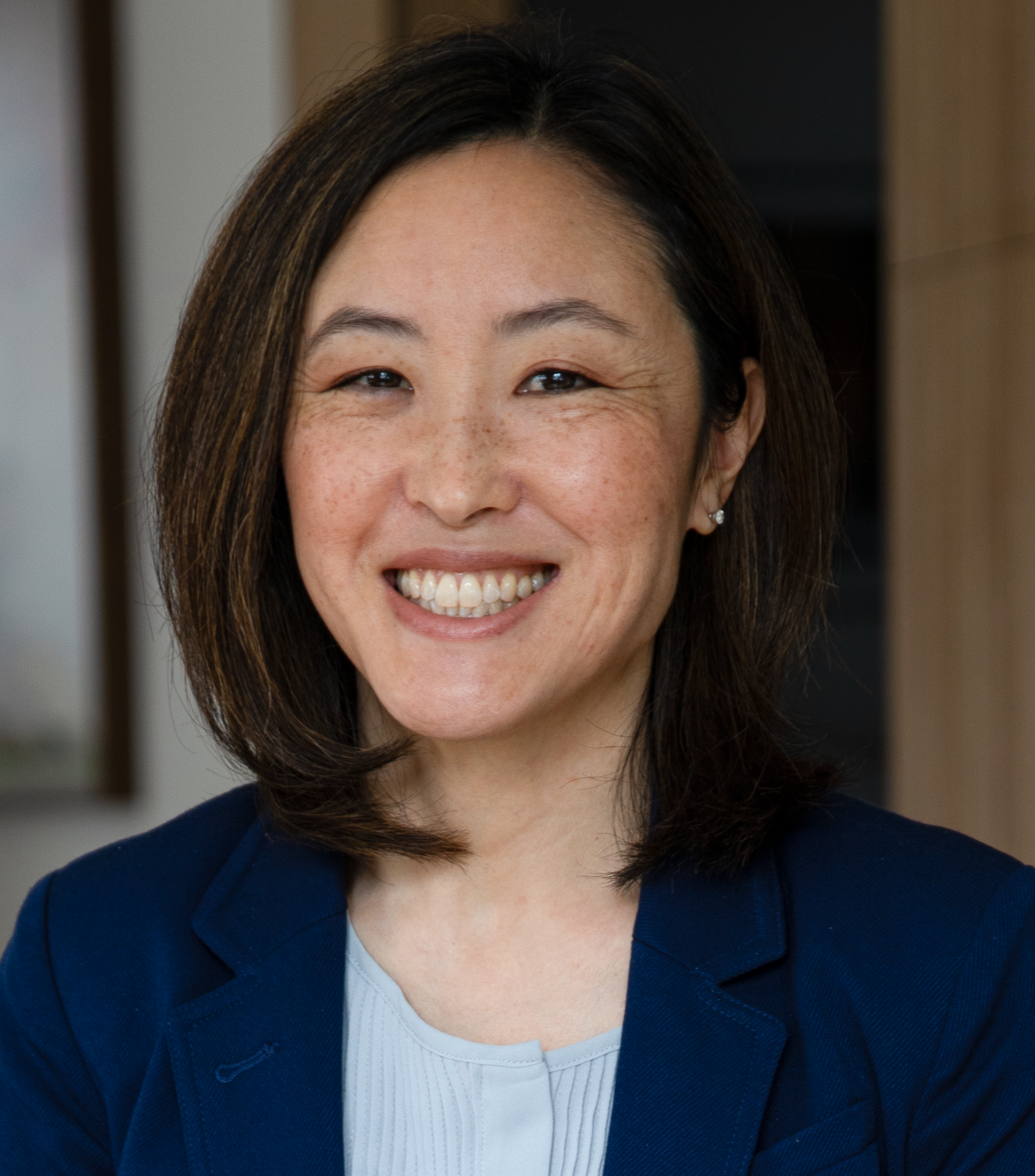
 The quality of your sleep fundamentally affects the quality of your communication. Communicating well, Dr. Cheri Mah says, starts with being well-rested.
“Sleep impacts nearly every aspect of how you function,” says Mah, a sleep physician, adjunct lecturer at Stanford Sleep Medicine Center, and internationally recognized expert on sleep and human performance. In her research and work, particularly with elite athletes and professional sports teams, she explores the link between getting rest and doing our best. “If you are getting quality sleep, you can think more clearly, react under pressure, make good judgment calls, have more patience, be more empathetic,” she says.
In this episode of Think Fast, Talk Smart, Mah and host Matt Abrahams explore strategies for better sleep, from bedtime routines to paying off “sleep debt” to the “nappuccino” — a caffeine-fueled power nap. Whether you struggle to sleep or can nod off at any time or place, Mah’s insights reveal why doing our best requires getting our rest.
To listen to the extended Deep Thinks version of this episode, please visit FasterSmarter.io/premium.
Episode Reference Links:
Connect:
- Premium Signup >>>> Think Fast Talk Smart Premium
- Email Questions & Feedback >>> hello@fastersmarter.io
- Episode Transcripts >>> Think Fast Talk Smart Website
- Newsletter Signup + English Language Learning >>> FasterSmarter.io
- Think Fast Talk Smart >>> LinkedIn, Instagram, YouTube
- Matt Abrahams >>> LinkedIn
********
Thank you to our sponsors. These partnerships support the ongoing production of the podcast, allowing us to bring it to you at no cost.
Strawberry.me. Get 50% off your first coaching session today at Strawberry.me/smart
Join our Think Fast Talk Smart Learning Community and become the communicator you want to be.
00:00 - Introduction
02:57 - Sleep & Performance
04:11 - Better Sleep Habits
06:16 - Quieting a Racing Mind
07:49 - Dr. Mah’s Night Routine
09:19 - Sleep Extension
10:52 - Preparing for Big Events
11:44 - The Nappuccino
13:21 - Managing Jet Lag
15:56 - Chronotypes Explained
18:00 - Starting the Day with Sleep
19:40 - The Final Three Question
23:57 - Conclusion
[00:00:00] Matt Abrahams: Your communication hygiene, what you eat, do you exercise, and how you sleep can fundamentally impact how you communicate. My name is Matt Abrahams and I teach Strategic Communication at Stanford Graduate School of Business. Welcome to Think Fast Talk Smart, the podcast. Today I'm excited to chat with Dr. Cheri Mah. Dr. Mah is a sleep physician and adjunct lecturer at Stanford Sleep Medicine Center. She's a recognized global expert on the impact of sleep on cognitive and physical performance. Her groundbreaking research at Stanford University famously demonstrated that sleep extension could significantly boost the reaction times and accuracy of elite athletes. Dr. Mah works with professional teams across the board in the NBA, NFL, NHL, and MLB. Olympic athletes and other high performers as well. She just won her second Super Bowl ring. She translates her clinical insights into practical tools that help executives and leaders manage fatigue and maintain peak mental acuity. Welcome, Dr. Mah. As a professional lousy sleeper. I really look forward to learning from you and as do many of our audience members, so thanks for being here.
[00:01:12] Dr. Cheri Mah: I'm so thrilled to be here.
[00:01:13] Matt Abrahams: Awesome. Shall we get started?
[00:01:15] Dr. Cheri Mah: Perfect.
[00:01:15] Matt Abrahams: Excellent. In the work that I do, I often talk to people about communication hygiene, to help them communicate at their best. Things like eating well, getting exercise, and especially sleep. How does a good night's sleep impact our functioning in general?
[00:01:30] Dr. Cheri Mah: A good night's sleep impacts nearly every aspect of how you function. If you are getting quality sleep, we know that you can think more clearly, react under pressure. You're able to make good judgment calls. We know that sleep is so important for our mental health. We recognize that we are less emotionally labile so we can have more patience. We are able to be more empathetic, qualities that obviously to be a good leader you need to have as assets. And then there's obviously how your body is functioning physiologically. We know quality sleep impacts hormonal levels like your testosterone level, cortisol as a stress response, even leptin and ghrelin, which regulate your appetite. So as you talk about eating habits and nutrition, it can very much influence how you're eating. And then outputs if it matters on the court for some of my athletes, then the physical performance measures like reaction, time, speed, accuracy, can also be impacted.
[00:02:29] Matt Abrahams: Sure, and as a communicator, being able to respond in the moment with clarity of mind would be really important. The reality is we live in a sleep deprived world. Many of us don't get the recommended amount of sleep, and as you mentioned, it can have some detrimental consequences to our health and the way we perceive the world. We see people more negatively in our communication relationships, and I've even read research that when we're sleep deprived, because it affects our empathy, we misinterpret facial expressions as more hostile or threatening. What advice do you give to people to help them sleep better?
[00:03:01] Dr. Cheri Mah: Yeah, sleep is challenging, right? And sometimes the first thing that goes out the door. But to the question about what can you do, I really advocate, it's all about these small steps and gradual changes over time. So it doesn't mean that you have to overhaul your whole day or how you're approaching your sleep at nighttime. You don't need to go from 6 hours to 9 hours, right? But small changes, even if it's having 5 minutes to actually have a wind down routine. Read a book or journal or even to listen to calming music. Something to get yourself into the mindset that you're able to relax and allow yourself to sleep.
[00:03:36] That can make a huge difference. Or if you're someone who's getting under 7 hours, which is the minimum that is recommended for every adult. That's okay. We've all gone through that. If you're someone who's getting, say, 6 hours, can you get 15 minutes more or 30 minutes more every day this week? 15 minutes actually makes a difference. So these small things really can make a big difference and they add up over time. So just a little bit of time and effort can make a big difference in your life.
[00:04:02] Matt Abrahams: I love this idea of gradual progress, right? It can feel like, oh, I just have to do it all. That's one of the things I'll get frustrated when I'm not sleeping. I need to sleep, which isn't helping. I like this idea of rituals to wind down, to transition. As I've shared, I'm a lousy sleeper. I have a ritual where the very last thing I will do before I go to bed is I'll watch 5 minutes of something funny. I like to go to bed laughing, so I'll turn the lights down a little bit. I'll watch a quick YouTube video of one of my favorite comedians. I don't know if it's the laughter that helps, but definitely just the tuning out my brain helps me, so I appreciate the advice.
[00:04:34] A common barrier to sleep and a common barrier to speaking anxiety is the racing mind that we have. Just ruminating, thinking. Do you have some ideas for how we can offload some of that so we're not constantly thinking and keeping ourselves awake? What can we do to help our brains at night?
[00:04:53] Dr. Cheri Mah: The racing mind is incredibly common. We've all experienced this at some point in time, especially when there's acute stressors. One of the things that I really recommend doing is spending 5 to 10 minutes either journaling, writing a to-do list, getting those thoughts from your brain and throwing it down onto paper so that we think maybe there is this cognitive offloading that can happen, but specifically you want to do this outside of bed before you then do something that's relaxing as your wind down routine and then go into bed to sleep. And the reason why is because so many of us get into bed and we have these racing thoughts and a lot is on our mind what we have to do the next day, what we went through.
[00:05:31] And then you're lying in bed with these swarming thoughts that can then lead to being awake for a half hour, an hour. So that can be incredibly frustrating, but your brain is starting to associate being awake with being in bed, and that's partly what we want to dissociate. So we give your body and brain time outside of bed to throw those thoughts down. And then once you've gone to process your thoughts, give yourself that time and space, then move on to a relaxing activity and then get into bed so that your brain's not associating those racing thoughts and what's on your mind, and you've given yourself that time before you're actually trying to sleep for the night.
[00:06:07] Matt Abrahams: I really like that idea of the bed and the bedroom or for sleep and not for sitting there stewing and ruminating. So do that outside of that space and do it to get it off your mind. And in fact, there's work in the literature on managing speaking anxiety. Same idea. Write the thoughts down, literally get them out of your brain. And sometimes you can even crumple up the paper and throw it away and feel a sense of agency. I'm curious. I can imagine at times sleep is hard for you as well. Do you have a routine or pattern that you like to follow?
[00:06:34] Dr. Cheri Mah: So I like to think about my evening. And what leads up into sleep before the time that I actually turn out the lights, I really try to dim lights in the evening time, both in my living spaces, in my bedroom, so we're not exposed to the really bright lights around, even as we're starting to wind down our day. And I really like to do some reading or journaling. I'm a fan of to-do lists because then I know that I've put down the things that need to happen the next day. I'm reassured it's right there and then I come back to it in the morning time.
[00:07:05] I try to shower a little bit earlier in the evening because you wanna shower about 90 minutes before you're falling asleep, not right before bed. The reason why is because that hot shower or hot bath, it increases your core temperature and so when you fall asleep, your core temperature drops. So you don't want those two competing signals happening close to each other. But if you back up that hot shower or bath by about 90 minutes, then there is some studies that show it can help people fall asleep faster and actually increase some deep sleep.
[00:07:37] Matt Abrahams: You've just changed a behavior in my life. I'm gonna shower a little earlier. It's one of the last things I do before comedy. Your famous first study you did with Stanford basketball players that showed an astonishing improvement in their shooting accuracy after sleep extension. Can you define what you mean by sleep extension? And for the rest of us corporate athletes, not professional or student athletes, preparing for high stakes presentations, meetings, negotiations, what might sleep extension look like in our lives?
[00:08:04] Dr. Cheri Mah: So sleep extension is really getting more sleep than your body requires each night to payback what we call accumulated sleep debt. So if your body needs a certain amount, let's just say 8 hours a night, and you only get 6 hours for a Monday through Friday, then every night you built up 2 hours of a debt, and then by Friday now you have 10 hours of debt. If you take, say Saturday and Sunday to sleep, hypothetically 10 hours, then you'll probably feel better. But we've only paid back 2 hours on that Saturday night, 2 hours on that Sunday night, so you've paid back 4. But when you had a 10 hour debt, you can see that the math leads to still having 6 hours of debt. So sleep extension means that if you got that additional hour instead of 8 hours, you get 9 hours, then you're gonna slowly start to pay down that debt. But it takes more than one night or one weekend of sleep to really bring that debt down. So sleep extension is a short term intervention to try to eliminate that debt down by getting additional hours.
[00:09:10] Matt Abrahams: How far in advance do you need to start that? Let's say, I know I've got a big presentation or a big meeting. Do I start building now or is it like 2 days before? When do I start?
[00:09:20] Dr. Cheri Mah: If you could do a week before, my research has really shown a more of a robust benefit in that week or 2 more so than when I've looked at longer 5, 7 weeks of sleep extension. And so if you know you have an important deadline, an important presentation, an essential meeting that you need to be at your best, if you can give yourself a week of trying to get sufficient sleep first, but if you get even a half hour or more, you're gonna put yourself in a better position to have that additional cushion if, for example, you don't get great night before that presentation or project. But I will say, even if you are able to get 1 night or 2 nights in there and you couldn't do a week, I would take that as a win.
[00:10:02] Matt Abrahams: I think the lesson for all of us, myself included, is that when we have some big event coming up to factor in our sleeping. A lot of us would be tempted just to stay up late rehearsing and practicing, and what I'm hearing from you is that's actually not helping at all. So build that in as much as is practical. I have to tell you, I smiled, I actually laughed out loud when I heard you talk about nappuccino, and I love that idea. What are your thoughts on napping and caffeine and how they can help us manage our sleepiness, but also just our performance?
[00:10:35] Dr. Cheri Mah: The nappuccino is one of my favorite tools. The nappuccino is when you take your favorite caffeinated beverage and caffeine will start to kick in in about 15 minutes. Now, if you go take a 20 or 30 minute power nap, then when you wake up after that power nap, both the caffeine will have kicked in and the power nap benefits will have taken effect and combined together, there's studies that have shown that the nappuccino, caffeine plus power nap, is more effective for alertness and performance enhancement than if you only took the caffeine or you only went and took a power nap. So that's the nappuccino and I love it as a tool because a lot of us are running on caffeine and a lot of us really, really wish we could take that power nap. So now you have my blessing to make sure that it's built into your day because it really is a great performance enhancer, whether you're an elite athlete, whether you are a corporate athlete, whether you are a working professional and a student, that it's a way to give yourself a boost for a couple of hours and be able to maintain that alertness at what it needs to be.
[00:11:39] Matt Abrahams: That's interesting. Okay. I learned something new. Many of our listeners travel and they travel across time zones. Some just a few, some many. And this jet lag can affect their performance in lots of ways. Do you have specific advice and protocols you recommend to help people manage this jet lag? So if I'm getting on a plane today, expecting to be at my best to give a presentation 3 time zones later tomorrow, what can I do?
[00:12:05] Dr. Cheri Mah: I always try to challenge my athletes, my high performers, to break down each of their trips into three phases so that there's strategies you can employ pre-flight before you even get on the airplane. Then there's strategies in flight, and then there's strategies once you get to the new location post-flight. Now it's a little complex of depending on which direction you travel matters. East is different versus westward. How many time zones you're crossing, 3 time zones is different than going halfway around the world. Now the things you can do pre-flight, don't go into your flight short on sleep because sleep deprivation will make jet lag worse.
[00:12:42] So get sufficient sleep beforehand. Don't panic pack, so you're short on sleep going into it. And then depending on the direction of travel, you can start to shift your bedtime and wake time. If you are on the west coast and you're going east coast, 3 time zones, you can start to shift your clock so that your bedtime is a half hour to hour earlier, and then your wake up time is a half hour to hour earlier, say 2 or 3 days in advance. So you actually have already shifted that clock by the time you get to the east coast, after the flight, maybe you only have to adjust by 1 time zone.
[00:13:13] Matt Abrahams: So maybe not schedule a super early morning flight either to disrupt your sleep.
[00:13:16] Dr. Cheri Mah: Exactly. You wanna be well rested going into it and choosing flight times can also be a different strategy depending on where you're going. When you're in flight, you wanna hydrate well, caffeine and alcohol generally, I say pass on. You wanna be strategic of when you're eating, so that can help to try and get your clock more acclimated to the new time zone.
[00:13:36] Matt Abrahams: So maybe eat on the schedule of the new time zone.
[00:13:38] Dr. Cheri Mah: Eat and sleep on the schedule of the new time zone, and when you arrive, it is about strategic light so that you can get your clock to be acclimated to the new time zone. Using caffeine and power naps when you're going to have this lull from your internal body clock and then trying to make sure that you can get back onto that schedule. Now, this sounds like a lot of different moving pieces. So there are some apps that can provide these day-to-day recommendations now, and you put in your flight time, your arrival time, and it'll give you a more strategic day by day schedule. So that is a way to start and having a smarter way to travel and minimize that jet lag.
[00:14:14] Matt Abrahams: I really appreciate you breaking it down into those three steps. When we had my GSB colleague, Baba Shiv on, he suggested that we should consider the time of day that we conduct certain complex tasks like ideation, brainstorming, decision making, and try to coordinate with times of the day to help us be more alert and ready for that. Do you have thoughts on how we can strategically think about what we are doing relative to our sleep wake cycle?
[00:14:39] Dr. Cheri Mah: That was very smart to be able to identify that your chronotype, which is your natural predilection to go to bed and to wake up at a certain time can be influencing when you potentially could structure your day so that it works more to your advantage. Some individuals who are morning larks know they do better when they go to bed earlier and they wake up in the morning. Others are evening owls. They like to stay up late. They like to wake up later in the morning. Now, if you're a lark you are gonna be most productive, most efficient in those first couple hours of the day. So that's when I would say if you fall into the lark category, you want to think about your important meetings, presentations, high cognitive load efforts in the morning time.
[00:15:23] If you're someone who is an evening owl, you don't do well in the morning, so don't structure your day to have those important things happen first thing when you wake up. You are gonna do better later in the morning or arguably in the afternoon and evening period. And so not just for work related high cognitive load things, but thinking about when you're working out and exercising, that can also be factors for when you schedule it in your day based on your chronotype. Now, there's a fair amount of people that are neither morning larks or evening owls. They will be somewhere in the middle and you can think about finding a balance between the two.
[00:15:59] Matt Abrahams: Thank you for that. And the, the idea of chronotypes, larks, and owls makes a lot of sense. In my house I am, by nature, a lark, but I live in a household, especially when my kids were living with us, with a bunch of owls, and if I wanted to have any engagement with my kids, I had to stay up late to do it. So it was frustrating, but I certainly appreciate the difference and distinction.
[00:16:18] On the show, we've talked a lot about how framing can change people's perceptions and actions. One of the things I've heard you say, and I think it's a really clever reframe, so I'd love you to talk about this, you say we should treat sleep as the beginning of tomorrow rather than the end of today. How have you found that this perspective shift helps the patients that you have and the athletes that you coach to be better?
[00:16:40] Dr. Cheri Mah: So this is one of my phrases that I really wanna challenge everyone to change their mindset around sleep. And it is to think of sleep, not as the end of today, but think of sleep as the beginning of tomorrow. And it's a small but powerful change in how you think about your sleep because for so many of us, it's the last thing that we ever think about in the day. A lot of folks will jump into bed whenever they wrapped up their day, and then whenever sleep happens, it happens. And so it's become this afterthought and you're very reactive to your sleep. But if you instead make a small shift and think about, okay, I'm gonna actually plan for when I want to sleep with a targeted bedtime.
[00:17:20] I'm gonna take five minutes to actually have a wind down routine so I can transition to have a calm state before I get into bed. Those things can make a world of a difference. And now you proactively have made this a part of your day and you're investing in how you're going to sleep. So the quality and the duration ideally are going to be setting yourself up for a much better tomorrow. Because what you do with your sleep can very much influence whether it's going to be heading in the direction of an amazing day, or you're setting yourself up for failure because you haven't given yourself an environment or quality habits that are gonna be conducive to good rest.
[00:17:58] Matt Abrahams: When I heard you say this, it really did change how I perceive my sleep because I do a lot of things in the morning to get myself ready for the day, and really it starts the night before and I really need to think about that. It, it was very helpful, so thank you. Before we end, I like to ask all of my guests three questions. One I make up just for you, and two, I've been asking everybody, are you up for that?
[00:18:18] Dr. Cheri Mah: Sure.
[00:18:18] Matt Abrahams: So you teach one of the most popular classes Stanford offers to undergrads. It's called Sleep and Dreams. When I was an undergrad here eons ago, it was one of my favorite classes. When you think about the students you teach, what do you think they find most interesting or what's one of the most valuable lessons they take away from the course?
[00:18:37] Dr. Cheri Mah: I think what makes the course particularly special is that no matter what major you are, whether you're an undergrad, whether you're a graduate student taking the course, we all sleep, arguably not well. And I think what impacts these students is that they take the lessons that they learn in Sleep and Dreams and can carry that with them through life. And we've heard a lot of students come back and say, you know, I don't remember what I learned in my math class or my chemistry class at Stanford, but you know what? I remember Sleep and Dreams.
[00:19:09] Because I learned to identify that sleep apnea is so common and snoring is not normal, I know how my patterns of sleep are as a undergraduate, and I made changes in my own life to get better habits in the day or influence what they choose to do in the evening time. So they individually felt like they had an experience of understanding what it means for them to make those small changes. And so I think the stories, the education around how these students are learning about this evolving field is uniquely impactful, that they carry those lessons with them as they go on through their life.
[00:19:46] Matt Abrahams: In many ways, how we treat our sleep is a lifelong journey, and you set them on that path. Who's a communicator that you admire and why?
[00:19:55] Dr. Cheri Mah: I'm going to say my mentor, Dr. Dement. So Dr. Dement is considered the father figure of the modern field of sleep medicine. He was my mentor. He mentored pretty much the whole field, but I think he was an amazing communicator because he had this skillset that he could speak to a wide range of individuals from politicians to students, helping them craft better habits. And I think he was able to do that in a very effective way, in addition to actually getting people to make some changes. So I think that he modeled a really great way of knowing how to speak to the right audience and be able to enact change.
[00:20:39] Matt Abrahams: He was definitely an amazing communicator, and the one thing that I will always remember about him is he is the only faculty member I have ever known who wanted his students to fall asleep in class because he was fascinated by it. He'd wake you up, he'd ask you questions about it, which of course meant nobody ever fell asleep in his class after it happened once or twice. But final question, what are the first three ingredients that go into a successful communication recipe?
[00:21:02] Dr. Cheri Mah: For me, I would say number one is clarity. Number two is adaptability, and number three is energy. For clarity, I think obviously being able to communicate concisely what you want to get across is essential. For adaptability, I think knowing who your audience is and being able to adjust how you present that. And be able to meet also your audience with where they are so that you actually are making that connection and that will be lasting. And then for energy, I mean, everyone just likes higher energy, so I generally think that it's a good strategy to be able to communicate effectively.
[00:21:42] Matt Abrahams: Everybody listens know I love a good acronym, and this is ACE, ACE, your communication, adaptability, clarity, and energy. Thank you so much, and you certainly aced this conversation. Not only did you share really valuable, practical, tactical tools we can use, you've changed the way I'm thinking about my own sleep, but you've also helped to refocus us on the importance of sleep, and I hope everybody listening turns off this podcast, takes a nappuccino, and feels refreshed. Thank you so much.
[00:22:11] Dr. Cheri Mah: Thank you so much. It's been a pleasure.
[00:22:15] Matt Abrahams: Thank you for joining us for another episode of Think Fast Talk Smart, the podcast. To learn more about communication hygiene, please listen to episode 183 with Kelly McGonigal. This episode was produced by Katherine Reed, Ryan Campos, and me, Matt Abrahams. Our music is from Floyd Wonder. With thanks to Podium Podcast Company. Please find us on YouTube and wherever you get your podcasts. Be sure to subscribe and rate us. Also follow us on LinkedIn, Instagram, and TikTok. And check out fastersmarter.io for deep dive videos, English language Learning content, and our newsletter. Please consider our premium offering for extended Deep Thinks episodes, AMAs, and much more at fastersmarter.io/premium. You'll also find value by joining our Think Fast Talk Smart Learning Community at fastersmarter.io/learning. You'll find video lessons, learning quests, discussion boards, my AI coach, and book club opportunities. Again, that's fastersmarter.io/learning to become part of our Think Fast Talk Smart Learning Community.