254. Start Fresh: How Framing, Timing, and Talk Can Improve Your Finances
How to have more open conversations about money.



Talking about money is taboo for many people. But according to Wendy De La Rosa, financial well-being only starts when we break the silence around finance.
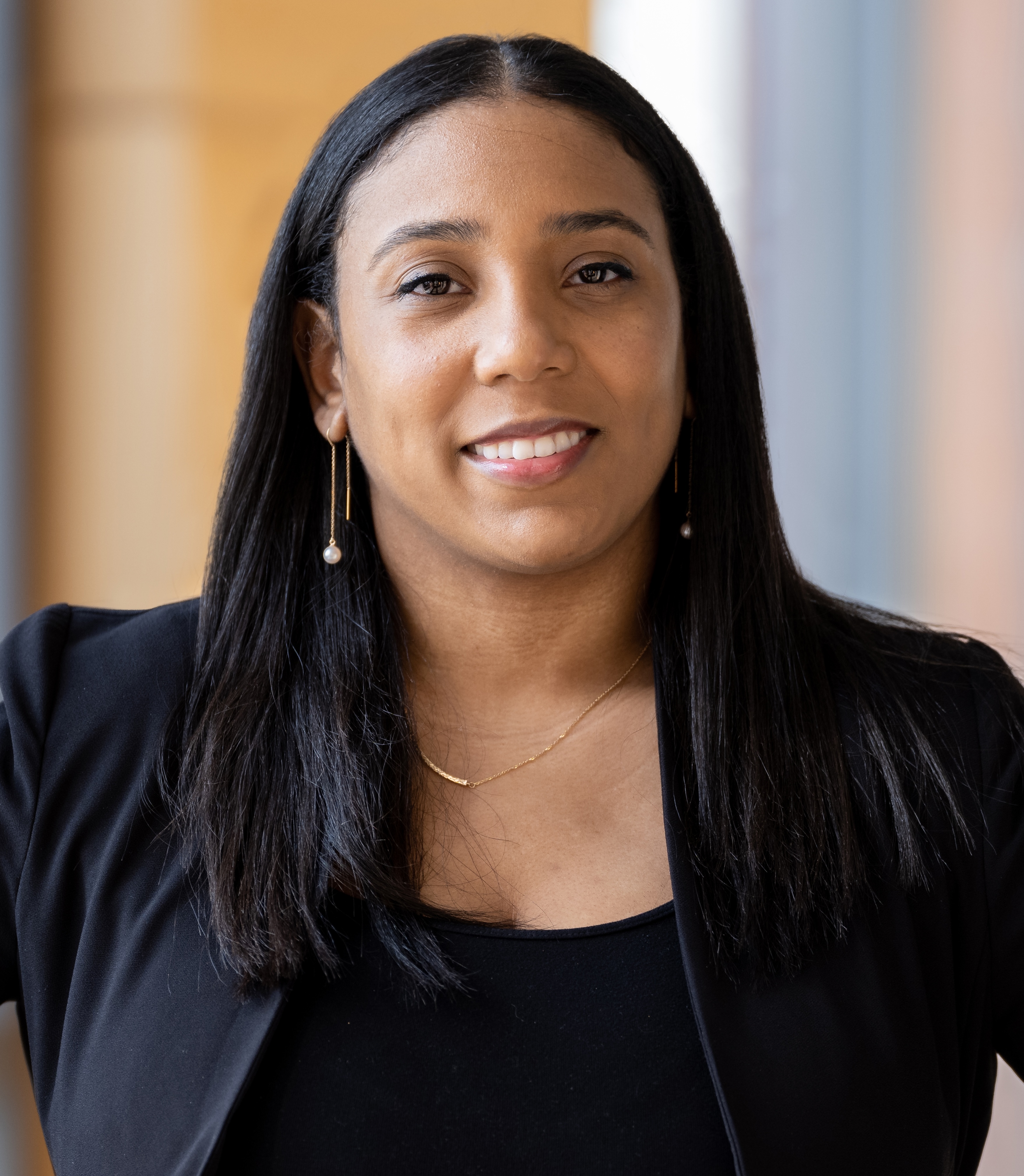
De La Rosa is a professor at the Wharton School at the University of Pennsylvania and a co-founder of the Common Cents Lab, an initiative aiming to increase financial well-being for low- to moderate-income people. For many, she says, shame keeps us silent about money. “Shame is paralyzing, and more than any other negative emotion, [it] leads us to ignore,” she says. But when it comes to financial well-being, ignoring our finances is the last thing we should do. Instead, De La Rosa advocates for open discussion. “Talk about finances,” she says. “How did you ask for a raise? What are you getting paid right now? These are important conversations that help everybody.”
In this episode of Think Fast, Talk Smart, De La Rosa and host Matt Abrahams explore how to have more open, productive conversations about finances. Whether you're a manager thinking about employee financial wellness or trying to broach a difficult topic with a partner or friend, De La Rosa offers practical strategies for breaking through the taboo around money.
To listen to the extended Deep Thinks version of this episode, please visit FasterSmarter.io/premium.
Episode Reference Links:
- Wendy De La Rosa
- Ep.104 How to Change: Building Better Habits and Behaviors (And Getting Out of Your Own Way)
- Ep.59 From Dreaming to Doing: How We Set and Achieve Goals
Connect:
- Premium Signup >>>> Think Fast Talk Smart Premium
- Email Questions & Feedback >>> hello@fastersmarter.io
- Episode Transcripts >>> Think Fast Talk Smart Website
- Newsletter Signup + English Language Learning >>> FasterSmarter.io
- Think Fast Talk Smart >>> LinkedIn, Instagram, YouTube
- Matt Abrahams >>> LinkedIn
********
Thank you to our sponsors. These partnerships support the ongoing production of the podcast, allowing us to bring it to you at no cost.
This episode is brought to you by Babbel. Think Fast Talk Smart listeners can get started on your language learning journey today- visit Babbel.com/Thinkfast and get up to 55% off your Babbel subscription.
Join our Think Fast Talk Smart Learning Community and become the communicator you want to be.
00:00 - Introduction
02:12 - The Fresh Start Effect
04:35 - Pay Timing Shapes Behavior
05:51 - Productivity and Financial Stress
08:17 - Framing Financial Choices
10:50 - Understanding Financial Shame
13:20 - Rebuilding Your Financial Environment
14:45 - Giving Financial Advice With Care
17:17 - Normalizing Money Talk
18:21 - The Final Three Question
23:39 - Conclusion
[00:00:00] Matt Abrahams: One of the most challenging conversations we can have is about finances. My name is Matt Abrahams, and I teach Strategic Communication at Stanford Graduate School of Business. Welcome to Think Fast Talk Smart, the podcast. Today I look forward to speaking with Wendy De La Rosa. Wendy is a professor at the Wharton School at the University of Pennsylvania, and she's the co-founder of the Common Cents Lab.
[00:00:26] That's Cents, C-E-N-T-S. Her research focuses on understanding and changing consumer financial behavior. She studies how small changes in a person's financial environment can have a large impact on their spending and saving habits. Well, Wendy, I am super excited to have this conversation. Thanks for being here.
[00:00:44] Wendy De La Rosa: Happy to be here. Thanks for having me.
[00:00:46] Matt Abrahams: Yeah. Should we get started?
[00:00:47] Wendy De La Rosa: Let's do it.
[00:00:48] Matt Abrahams: In your work on financial decision making, you've spent some time working on the fresh start effect. Can you share what that is and how we can actually leverage that in our own motivation?
[00:00:57] Wendy De La Rosa: That's such a great question. I wanna give credit where credit is due.
[00:01:00] So the Fresh Start Effect is identified by Katy Milkman, one of my amazing colleagues here, who leads our initiative Behavior Change for Good. And in her work, she sort of identifies the fact that everybody wants to change. We wanna be better humans, we wanna be better parents, better spouses, et cetera, better with our money.
[00:01:17] But the how and the when is always a little bit hard, bridging that gap between intention and action. And so, one of the key findings in behavioral research is that we need to time. our interventions really well so that your motivation to act is activated and peaked. And so, we know from research that the number one time when people download financial management apps on at the app store, for example, is December 31st and January 1st, right? New Year, new me.
[00:01:46] But its Fresh Start effect doesn't just have to start there. We can think about our birthdays, we can think about new seasons. The beginning of every month, the beginning of every week. One of the experiments that I conducted with a company called Silver Nest, we used this idea to do something that I think was really unique.
[00:02:04] So Silver Nest is this company that tries to connect older adults with each other to try to solve a problem. One housing is so expensive now in the United States, but two, we have a loneliness epidemic, and we know one of the biggest predictors of our long-term health, even our longevity, is the number of daily meaningful interactions we have with another human being. And so, they try to pair up older adults.
[00:02:29] As you can imagine, that's a hard ask, right? Let me invite somebody that I don't know into my home. So, we ran a couple of experiments on their marketing, mostly on Facebook ads to say, hey, you are 64, turning 65. Have you thought about a change? Or you're 49 turning 50, or your 53 turning 54, have you thought about a change versus you're getting older? Have you thought about a change?
[00:02:52] It's not a surprise. People know their age. It's not new information, but it's a cue to say there's a meaningful change happening, maybe I should reexamine how I'm living my life. And we saw that it led to higher click-through rates on the ads. It led to more activity on the website. And so, we were really excited about that.
[00:03:11] Matt Abrahams: This idea of finding signals that can help move people from intention to action is really important. And it can be a particular date; it can be some other significant event that just helps us refocus. And it sounds like it leads to not only more focus, but actually more action.
[00:03:29] Wendy De La Rosa: For me, I think timing is everything, not just in relationships, right? We have that old saying, timing is everything, but timing is everything when it comes to behavior change. It was one of the core sort of findings in my dissertation that even the timing of how we receive our money.
[00:03:43] So if you receive your paycheck every week, versus every two weeks, versus every month, that fundamentally changes how much money you think you have. So higher payment frequencies, right? When we have shorter time intervals between when we get paychecks, it makes us feel a little bit richer, and so therefore we're more likely to spend on the margins. So, it paradoxically can undermine our financial wellbeing. Holding constant the objective level of income, right?
[00:04:09] So we're both earning whatever it is, 50,000, 100,000, 150,000. But just by changing the timing of it, all of a sudden, our relationship with money changes. And we have so many examples of showing the importance of timing as this underexplored, but really important aspect that we should all be thinking about in our lives.
[00:04:27] Matt Abrahams: So, if I'm a manager running an organization, how could I leverage your insights into timing to perhaps motivate my employees more help with efficiency and productivity. Any ideas on that?
[00:04:38] Wendy De La Rosa: Well, I think there's two key recommendations I would have. The first one is we know that productivity is fundamentally tied to financial wellbeing. So, if your employees are financially stressed. They can't show up with their full self at work, their brain activity, their attention is gonna be focused on something else.
[00:04:56] And so as a manager, I always say, look, you know that when your employees are sick, you give them a sick day. When they need vacation, when they need to rest, to avoid burnout, right? We have vacation days. I suggest giving everybody a financial health day. Because everybody, again, going back to this intention action gap, we all know that we should go back and revisit our retirement allocation and increase that, right? We all know that we should finally get around to opening up a 529 account for our children. We all know that we should probably create a will and all of these things that people know they should do. The critical piece is time.
[00:05:27] So if you create a norm in your organization, create a financial health day to say Everybody on this date. We are all gonna try to get our collective act together. Take the time to finally call your credit card company and ask for a lower interest rate. Take the time to finally cancel that old subscription that you know you should have canceled 20 years ago, or whatever the case may be, because it's not just something good to do. Research has shown it Increases the productivity of your worker. So that's tip number one.
[00:05:56] Matt Abrahams: I like that idea, and you've just motivated me to go change some subscriptions I have, so thank you.
[00:06:01] Wendy De La Rosa: You know, I always tell people, put it in your calendar. Love yourself enough to prioritize you today.
[00:06:05] But the second piece is to really fundamentally think about the timing of when you're asking your employees to make financial decisions. For example, we ask our employees to make critical financial decisions in the first week of employment.
[00:06:20] Like what's your retirement allocation going to be in the first week that you've just hired somebody? They're probably trying to have multiple calls with it to figure out what their login and username and password's going to be to remember whether or not your name is, you know, dig Joe or Harry, right?
[00:06:36] There's so many things that are happening in that first week of employment, like it's just not set up in a way that's sustainable. So, I think that's one, like create space for employees to go back and actively encourage employees to go back to really think about that decision if you don't already automate it.
[00:06:53] Matt Abrahams: I think you're dead on, right? When we ask people early on in their careers to make all these fundamental decisions that they're just trying to get, which end is up, figured out. I felt the same way when my wife and I got engaged, there were all these questions about what do you want for your gifts, et cetera. And had I had a year into the marriage, I would've changed everything about what I was asking for.
[00:07:12] And so the idea that we can help our employees by having them make these decisions that are long term a little later, once they have a more appreciation, I think is a great idea. You studied the power of framing on financial choices. Uh, can you give a specific example of how a leader or manager's communication framing of, let's say a budget cut or some new financial policy, can either trigger a scarcity mindset or inspire a problem-solving mindset? How come the words we use in the way we position it influence how people see it?
[00:07:43] Wendy De La Rosa: That's a great question. I, along with Stephanie Tully and Eesha Sharma have looked at this concept called psychological ownership, which is like people's feelings about things, places, ideas. Do I feel like I own Stanford, a piece of Stanford? Do I feel like Stanford is mine?
[00:08:00] I think about my own laptop. I even say this is my laptop. Even though the ownership of it is actually the University of Pennsylvania's laptop. It's really important to think about what is the psychological ownership that your employees feel over the organization, because if this is my organization, clearly, I'm going to care much more about that organization and go outta my way to make sure it succeeds.
[00:08:21] Versus if the framing and the communication is all about you are just on loan here, you are not going to get the same level of investment, motivation, attention from people who just recognize that this is not something that, this is not a dream that I own. I don't own a piece of it. I'm not invited to even dream about a future here. And so, when negative things occur, if you involve people in the process. And are transparent and treat people with dignity so that they can feel psychological ownership. I think that's really important.
[00:08:51] Suzanne Chu at Cornell has done some work looking at if you increase the sense of psychological ownership of citizens over public lands, people are much more likely to take care of that land. So, this is one of the psychological constructs that goes beyond just ownership of, a thing, right? We can think about ownership of places, ideas, membership, institutions, organizations, and oftentimes we ignore that. And so, I encourage any leader listening to this check yourself, right? I'm from the Bronx, so just check yourself. What are the words that you're using to describe your own organization?
[00:09:26] Matt Abrahams: I'm gonna go home and try this with my kids. Talk a lot about your room, your cleanliness, and see if I can get them to pick up the stuff around. But this idea of it's how you can connect people to their work and to what they do, and then that changes the relationship they have and the care and concern they put forward.
[00:09:44] You discuss the concept of financial shame. What is this and how can we talk about money more openly with friends and family to overcome this barrier so we can actually have more honest, open conversations?
[00:09:58] Wendy De La Rosa: Yeah, shame is one of these negative emotions that's paralyzing in many ways, and I think we have, and I'll talk about this more in sort of the US context.
[00:10:06] We have thought about financial wellbeing as this individual pursuit, right? If I am financially successful, by and large, we make dispositional attributions basically. It's because of your work ethic; it's because of your intelligence. All of these internal factors versus external factors, right? We tend to downplay luck, our communities, our support systems, our mentors, our all of these things.
[00:10:28] And so when people find themselves in a place where they are not financially secure, where they feel like they're doing everything they can, and yet they're struggling because we've created this narrative about financial wellbeing being this individualistic pursuit, then who is to blame other than myself, only me. And so that vicious cycle creates this shame where, how can I even talk about this openly because me talking about this openly is only going to lead to me recognizing my own personal feelings over and over again.
[00:11:01] And shame more so than any other negative feeling emotions leads us to ignore. And in financial wellbeing, that's the worst thing you could do, right? Not doing anything is the worst thing you could do. So, what I like to tell people is let's breathe and try to melt the financial shame away because we have to recognize that every company out there is getting faster, smarter, more efficient. Of course, we haven't even talked about AI in this conversation at getting you to part with your money.
[00:11:28] It's not even a David versus Goliath metaphor, if you like that metaphor, it's a David versus thousands of Goliaths. And so, once you've recognize that the environment is not necessarily set up for you to succeed, then we can have a little bit more empathy with ourselves and then recreate our environment. And that's the critical piece, right? We can't just sit in the current environment and expect things to change. Let's figure out how we can do our best to recreate our environment.
[00:11:56] Matt Abrahams: What are some things people can do to recreate that environment so they feel a sense of agency rather than being the victims of not doing what they should be doing?
[00:12:05] Wendy De La Rosa: That's a great point. So first I tell people, you know your financial situation better than anybody else. You know your vices and your virtues. Take the financial health day, as we talked about earlier, to get a handle on your vice and what does that mean? For some people, it's I recognize that I can say no to that new jacket one time, but when it follows me throughout my entire online journey, day in and day out, I may not have the willpower to say no the hundredth time.
[00:12:31] And so how do we recreate our environment and install ad blockers throughout your entire financial life. The convenience of a DoorDash or an Instacart or Uber Eats is just so high. And so, I tell people either make the decision to remove that app from your phone or link it to a prepaid card where you're installing an instilling a mandatory limit on yourself.
[00:12:55] And then the third piece is timing matters so much. So, I sound like a broken record now, but it just, it is so critical. Take a look at when you receive your pay and take a look at when your bills come in, and if there's a fundamental mismatch there because you get paid on the first and your big credit card bill is not due until the 17th, then now you're allowing opportunities for overspending. Call the credit card company and change your payment date so it aligns with your pay days.
[00:13:21] Matt Abrahams: It sounds like you're talking about automating some things that keep you on that path, and also looking at all the automations that already exist and challenging some of them so that you can not necessarily fall victim to some of that work.
[00:13:37] As somebody who might want to give advice or to help someone who is perhaps not in as much control of their finances as they'd like to be. Do you have advice and guidance on how to give that kind of feedback in a way that doesn't feel threatening and can truly be heard and helpful?
[00:13:53] Wendy De La Rosa: I'd like to frame it from the concept of love. Like when we see somebody that we love with a broken arm, we don't just ignore it. We don't just turn our head and pretend and hold their other hand. That's not what we do. We try to address it. We encourage them to go see the doctor for whatever reason. We don't do that with financial wellbeing. And finances, I like to say are the hidden person at the dinner table.
[00:14:17] If you know you have a friend that's going through a major life change, whether that's a new child, getting married, going to college, moving across the country for a new job, getting divorced, going through a cancer treatment, everything that's meaningful in our lives sadly also come by and large with some financial change. And so, to ignore that is actually not loving.
[00:14:42] And so the first thing I would say is approach it from a place of love. I really care about you. I love you. Help me understand what's going on and how can we help? And help doesn't have to be always lending or giving money. Help can be, helping someone walk through a situation or connecting them to the appropriate resources or just providing time and support. There's all of these ways that we can help.
[00:15:05] And the second thing I'll say is that there are troubling statistics showing that people are much more likely to talk with their friends about their political ideology. They're past dating history and sexual escapades and all of these things, but for whatever reason, money is still taboo.
[00:15:21] So much so that engaged couples, like 40% of engaged couples, have not shared. Their income with one another. Like you are about to say, I'm ready to go through life with you, but I don't you, you don't wanna share your financial picture. There's something fundamentally broken there, and this is maybe a little cliche, but if you're gonna spend life with someone, have the financial conversation, make it a date, get a bottle of wine, put it on the calendar and say, let's be vulnerable together, because what else is love is, if not vulnerability.
[00:15:53] Matt Abrahams: Framing it as love and as a gift of concern for somebody, I think is a great way of doing it, rather than, I have something that you don't have and let me help you. I really like the idea of turn it into an event, make it something that isn't a labor. It's something that actually can be fun, if you will, just to have this kind of connection.
[00:16:13] Wendy De La Rosa: And change the norms around the discussion. One of the things that my girlfriends and I used to do is we used to have monthly brunches just to talk about finances. So how did you ask for a raise? What are you getting paid right now? These are all important conversations that aren't had and that help everybody. But it's odd to have that conversation, so you have to create a norm. Hey, we're gonna be transparent with each other about this because we care and we're gonna lift each other up. And so yeah, let's do it over boozy brunch.
[00:16:41] Matt Abrahams: I think that's great. I have found in my life with lots of topics that are taboo that just initiating the conversation opens up the opportunity for others to share, and I love this idea of let's make it fun, or let's connect and let's show how we're supporting each other.
[00:16:57] Wendy, this has been a fantastic conversation. Before we end, I like to ask three questions of all my guests. One I create just for you, and two are similar across everyone. Are you up for that?
[00:17:07] Wendy De La Rosa: I am.
[00:17:07] Matt Abrahams: So, Wendy, you've done a lot of really interesting in-depth research. I'm curious, what has surprised you most in the work that you've done?
[00:17:14] Wendy De La Rosa: I think the core finding has sort of always stuck with me. Is that we always tend to think about income as this unidimensional construct, right? It's all about, I earn 50,000 and you earn 70,000, or I earn a hundred thousand and you earn 200,000. And that's actually just one dimension of income, which is level.
[00:17:34] The thing that has surprised me the most is how much we can change and alter and influence consumer behavior by altering the other dimensions of income, like the frequency, like the income volatility of income, like the source, whether it's coming as a bonus or as a salary. All of these things that we didn't really get into in our conversation really matter and frame how people think about that money and fundamentally spend that money.
[00:18:01] Matt Abrahams: That idea of widening the aperture to look beyond income as just one unitary thing can really make a difference. Thank you for sharing that. Question number two, who's a communicator that you admire and why?
[00:18:14] Wendy De La Rosa: Oh, so many. I will say Adam Grant has just been such a powerful force. I was his student his second year when he joined Wharton, and I think he has like such an amazing way of connecting with people by sharing his own vulnerabilities. And so, I like to emulate a lot of my teaching based on him. He's been highly influential in my life and I'm so lucky.
[00:18:36] But I think the most direct and most influential communicator in my life has been my mother. She is the queen and master of Caribbean idioms that just cut deep in a way that no one else can, right? I was sharing recently and I just find myself now repeating her idioms. Learn to love those who love you. And that was, those are just words from my mother or, there's a lid for every pot, or like all of these things that have so much wisdom.
[00:19:03] Matt Abrahams: I was just gonna say wisdom in common vernacular sayings.
[00:19:06] Wendy De La Rosa: Yes, in a way that is so succinct. It doesn't waste any words. She is a great orator, but it's her ability to just pull on these idioms that make her so amazing.
[00:19:17] Matt Abrahams: And how they hit a chord. They strike a chord. And if your mother is like my mother, they come at just the right time.
[00:19:24] Wendy De La Rosa: Oh yeah. Sometimes when you don't want them to, but you need them.
[00:19:27] Matt Abrahams: Yeah. And they reverberate for a while, and you really see how they hit. Final question, what are the first three ingredients that go into a successful communication recipe?
[00:19:37] Wendy De La Rosa: So, the first I would say is curiosity. You can't actually engage in a conversation without being curious about the other person. If not, then you're just engaging in a soliloquy.
[00:19:47] The second would be humility to understand that what you're hearing is not necessarily what the person is saying. There's so much loss in hearing.
[00:19:57] And then I think the third. Clarity. So, in order to be an effective communicator, you need to be clear in your own wants and your own needs and in your own message, and so much gets lost in vagueness. I think people keep saying clarity is kindness. I think that's so true.
[00:20:14] Matt Abrahams: Curiosity, humility, and clarity. A wonderful recipe. The point about curiosity is the bridge to connection, humility, to realize that we bring a lot to our conversation that might actually get in the way of what's really being said and making sure that we are focused so that people can understand.
[00:20:35] Thank you and thank you for providing the focus we all need to be thinking about when it comes to our finances, but more broadly about how we learn and approach very difficult, challenging situations in our lives, and financial information and finances are one of those things. This has been wonderful. Thank you.
[00:20:54] Wendy De La Rosa: Thank you.
[00:20:58] Matt Abrahams: Thank you for joining us for another episode of Think Fast Talk Smart, the podcast. To learn more about how to be more effective in your financial communication, please listen to episode 104 with Katy Milkman and episode 59 with Szu-chi Huang This episode was produced by Katherine Reed, Ryan Campos, and me, Matt Abrahams, with special thanks to the Wharton Podcast crew. Our music is from Floyd Wonder, with special thanks to Podium Podcast Company. Please find us on YouTube and wherever you get your podcasts. Be sure to subscribe and rate us. Also follow us on LinkedIn, TikTok, and Instagram. And check out fastersmarter.io for deep dive videos, English language learning content. And our newsletter. Please consider our premium offering and extended Deep Thinks episodes, Ask Matt Anything at fastersmarter.io/premium.