280. Stay Relevant: Future Proof Your Career in an AI World
Work is changing, not ending—what it takes to stay relevant in an AI-driven world.



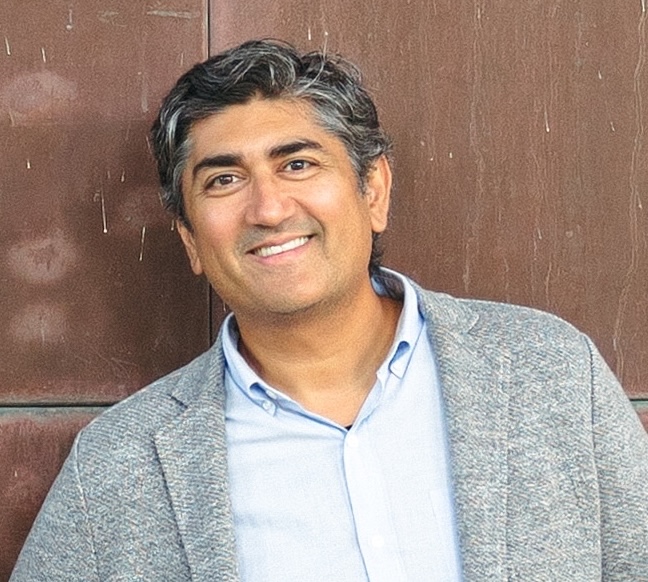
Careers aren’t ladders anymore — they’re climbing walls. As Aneesh Raman puts it, “work is changing, not ending,” and success today depends on how well you can navigate change and explain your path along the way.
Raman is the Chief Economic Opportunity Officer at LinkedIn and a former presidential speechwriter for Barack Obama. His work focuses on the future of work and how individuals can adapt in an AI-driven world. In his book Open to Work, he argues that the most valuable skills today aren’t technical — they’re human. “We now have this technology that's gonna do more, better, faster… It will out efficiency us,” he explains. But that shift creates opportunity: “When you recognize that humans aren't meant to be machine-like, and that machines will eventually out machine us, that isn't the end state. It's going to be a more entrepreneurial era where we're going to rely on our unique ability to imagine, to invent, to create.”
In this episode of Think Fast Talk Smart, Raman and host Matt Abrahams explore what it takes to navigate a rapidly changing workplace. From the “Five C’s” to practical ways to redesign your role around human strengths, Raman shares how to stay relevant as work evolves, the power of audience-first communication, and why great storytelling starts with understanding yourself.
To listen to the extended Deep Thinks version of this episode, please visit FasterSmarter.io/premium.
Episode Reference Links:
Connect:
- Premium Signup >>>> Think Fast Talk Smart Premium
- Email Questions & Feedback >>> hello@fastersmarter.io
- Episode Transcripts >>> Think Fast Talk Smart Website
- Newsletter Signup + English Language Learning >>> FasterSmarter.io
- Think Fast Talk Smart >>> LinkedIn, Instagram, YouTube
- Matt Abrahams >>> LinkedIn
********
Thank you to our sponsors. These partnerships support the ongoing production of the podcast, allowing us to bring it to you at no cost.
This episode is brought to you by Babbel. Think Fast Talk Smart listeners can get started on your language learning journey today- visit Babbel.com/Thinkfast and get up to 55% off your Babbel subscription.
Join our Think Fast Talk Smart Learning Community and become the communicator you want to be.
[00:00:00] Matt Abrahams: Your career is more like a climbing wall than a ladder, and your ability to communicate that clearly is critical to your success. My name is Matt Abrahams, and I teach Strategic communication at Stanford Graduate School of Business. Welcome to Think Fast Talk Smart, the podcast. Today I look forward to speaking with Aneesh Raman. Aneesh currently serves as the Chief Economic Opportunity Officer at LinkedIn, where he leads global initiatives to navigate the future of work and expand economic mobility. Before this, Aneesh was an award-winning CNN International War correspondent and a presidential speech writer for Barack Obama. His latest book, written with LinkedIn CEO Ryan Lansky, is Open to Work: How to Get Ahead in the Age of AI.
[00:00:46] Well, welcome Aneesh. I have to share with you, you have the most diverse background of any guest we've ever had, and I wanna explore that in a moment. But I'm really excited to learn from you today. Thanks for being here.
[00:00:55] Aneesh Raman: Well, I'm so excited to be here and I'm grateful for the work you do to help everyone be able to tell their story and to impact the world in new ways with their story.
[00:01:03] Matt Abrahams: Well, thank you. Shall we get started?
[00:01:04] Aneesh Raman: Yeah, let's do it.
[00:01:05] Matt Abrahams: So your career path is fascinating. You've been a war correspondent, a presidential speech writer, a corporate executive among many roles, communication looms large in all of them. I'd love for you to share just some lessons learned, best practices you bring to your communication.
[00:01:21] Aneesh Raman: You know, it's funny as you phrase it, my mind is immediately recalling for a long period of time I ran away from communications as a term that I wanted to be defined by, wanted a job around. I thought it was limiting, confining. As you'd say, my career is interesting, but makes no sense by job title. It's not a one plus one equals two. And a lot of it was me starting as a reporter and then leaving reporting because I wanted to do more than report the story. I wanted to shape action around it, so I go into government, and then it was more than just writing and speaking. How do we get action going into growth and policy campaigns? When I joined LinkedIn a couple months in, someone came up to me and said, you're a really good storyteller.
[00:01:56] And that was this like really important moment because at first, again, this, I had this reflexiveness against being like pigeonholed and storytelling was like campfire, children's book. But I started thinking about it and I said, yeah, that is actually something that I really enjoy doing in service of a bunch of other goals. And I started researching storytelling and falling in love with it as a thing that people can do and get better at and really change the world around. I mean, Sapiens, that book talks about storytelling is as important to our growth and progress as a species as tools. As I thought about it more, and to your question, sort of what has carried me through, it's really been explanatory storytelling, is like the best I can define the longest serving skillset that I have had and honed.
[00:02:36] And to me the key things about that, first of all, you just have to be endlessly curious, and if you aren't, put yourself in a space where you are. Shift into a sphere where the work itself is feeding it. Find a way to find ways into that topic. But I'm just like endlessly curious. And in that curiosity, I am compulsively trying to connect dots. 'Cause for my own sake, I'm trying to make it simple so I understand it. And that has just developed into a communication style that is really maybe not as descriptive as others, maybe not as gripping as a story to others, but it's really the intent is to help you understand something better and more and more in a way that gives you a better sense of self and a better sense of belief about what's possible.
[00:03:16] Matt Abrahams: It's interesting how you answered the question. You talked about yourself internally, the the curiosity is the engine for the storytelling, and then the connection of ideas is really important, and what I have enjoyed in getting to know your work through your writing, and through the other ways you communicate.
[00:03:30] I would be remiss if I didn't take this opportunity. You will soon find out at the end of our show, I'm gonna ask you three questions. One of the questions is, who's a communicator you admire most? At the top of that list is always Barack Obama. Actually, he's beaten by Michelle Obama, more people refer to her than him, but you had the job of helping write speeches for him. I'm just curious if you can share some insight that others can benefit from about his approach to communication, and perhaps your approach in helping enable that at communication, that we could all benefit from.
[00:04:01] Aneesh Raman: The first thing I say is to be one of his speech writers is an extremely humbling act because you know he's always gonna be better than you. That if he had the time and space to write the speech you were working on on his own, it would be so much better than anything you were gonna offer up. So it was a unique experience to not just be a speechwriter, but be a speechwriter for him. I think with him it was always audience first. That was something that was very clear. Who's in front of him? What's the story of the folks who are in that audience? We would always end with a story of someone in the audience. Most of what I take from him is actually as a spouse and a father. He has become this role model for me of like feminist husband, feminist dad.
[00:04:40] He has two girls. I have two girls. So when I think about him, like most of what I think about is how I'm trying to model myself as a man. But the memory I go back to a lot with him is I was writing a speech and it was after a second inaugural, and we were gonna talk about how in that second inaugural, he has put his hand on the Bibles of Martin Luther King Jr. and Abraham Lincoln and I had written some section there about when they turned to faith, what those moments must have felt like, must have been like. Lincoln in the midst of the Civil War, walking through just fields of fallen soldiers. King in the depths of bombings and other things that the civil rights movement had provoked.
[00:05:15] And so I'd written something and it was the only time I ever got a call from him at my desk. 'Cause other speech writers who were more in the mix would be, you know, interacting with him more. I came late into the speech writing group. And I remember picking up and thinking, oh, it was just one of his aides who was saying, we've got edits or something, some casually picking it up, and suddenly he's on the other end. And his call was about that part of the speech and really just pushing me to recognize like the human experience of that. And so he just stayed human. I think that's probably the summary statement. And he was able to speak human, think human, be human in ways that most people who get to a job like that no longer retain. And he fought to keep it throughout and I think keeps it to this day. And Michelle too. And so that to me is like a role model too. It goes to the authenticity of communication.
[00:06:01] Matt Abrahams: It sounds to me like part of what was important in that job for you and for him was understanding your audience. Bringing in managing the emotion and really respecting the impact that you can have and that the words have on people. And, and I think all of us can think about how do we bring our authentic self, how do we think about our audience, and how do we think about emotion and how we can connect? I appreciate that.
[00:06:22] I wanna turn to your book. In your book, you argue that careers are no longer predictable ladders, but they're dynamic climbing walls. As somebody who likes to climb, I love this analogy. Can you share what you mean by this? And what advice do you give to people who then need to explain or pitch their career climbing wall?
[00:06:41] Aneesh Raman: There'll be a theme. It starts with self is the most important thing I would tell everyone. We are living through what I think is the greatest disruption of work in human history. What work is gonna look like in 5, definitely 10 years, is gonna look very different, if not nothing like what work has looked like for the past 300 years. As we've been in the industrial age work had a certain predictability, clarity, stability to it. The industrial age was entirely about efficiency. It was the speed and scale of production of goods and services. So since the steam engine to now, all of us humans at work have just been about efficiency, supporting these machines in doing more, better, faster. And that doesn't matter whether you are on the factory floor, on an assembly line, or in a cubicle on your laptop. It was more, better, faster, more, better, faster.
[00:07:24] We now have this technology that's gonna do more, better, faster, more, better, faster. It will out efficiency us. And at first, I think a lot of people are really freaked out about that. But when you recognize that humans aren't meant to be machine-like, and that machines will eventually out machine us, our brain existed far longer than the industrial age. I mean, the brain that we have is about 40,000 years old, at least, in terms of not just shape and size, which is like 300,000 years old, but ability of complex thought. We created nation states, we created the monetary order, the beginnings of all these things before the steam engine showed up. So we're gonna go back to that.
[00:07:56] It's gonna be a more entrepreneurial era where we're gonna rely on our unique ability to imagine, to invent, to create. So what does that mean for your career? Well, in that efficiency age, or predictability reign, you had a career ladder and you knew what to do. If you could get on one with the right degree or get into the right job at the right company, you're just climbing to the next rung. You're trying to get your boss's job, your boss's boss's job. And I know that sort of clarity has been comforting for people, even as it's been limiting for so many people who didn't have the right pedigree signals of the right degree or the right zip code they grew up on to actually get on that ladder.
[00:08:31] But that ladder is done because organizations now cannot build around stability, predictability, efficiency. Companies are gonna have to build around innovation, agility, dynamism. And so we use the wall as something you're climbing to signal that. The chapter opens with the story of Mo Beck, who's a one-handed climber. And Mo talks about how she climbs routes. And if you're a climber like you, you know, you don't just go up, you sometimes go down, you go sideways, all to go up. But there's multiple ways that you can get there. And if you're Mo Beck and you only have one hand, there are a bunch of ways only you can go.
[00:09:04] There's some ways you can't go, but there are ways only you can go. And we talk about how she used that reality to her advantage to climb climbs that only she could climb. So we're all gonna have to do that now, and that can be really stressful at first, if you feel like the role you had to build your career was to check the tickets and get on the ladder to now you get to decide, but you get to decide. And so we talk in the book about, and we have different like frameworks for people to use, but you know, it starts at the core with why do you work? And for most of us, that's a paycheck to earn a living. But as you do that or beyond that, is it about the impact you want? Is it about the type of organization you want to build?
[00:09:37] And then what do you do? And I think Reese Witherspoon had a great line recently where she said, chase your talent, not your dreams. There's something you do instinctively, well, something you love to do that you just want to keep getting better at it. You're curious about it. You don't have to push yourself to want to push yourself. If anything in that realm is something that the world wants and will pay you for and that organizations need and will promote you for, that's your core. That's your, what do I do? So why do I work? What do I do? And then where do I want to be? And that's gonna change constantly. But am I an environment that I'm learning in the right way?
[00:10:06] Am I an environment where I'm delivering at the impact level I want? It's really meant to give you this sense of optionality, which is gonna be fear inducing for a lot of people 'cause they won't know where to start. And so, I don't know, maybe even in your own experience, those first climbs, when you could go anywhere, how you think about it. And I think ultimately for all of us, and maybe you can validate this, just think about the next step.
[00:10:28] Matt Abrahams: So many rich things in there. I want to explore and we will in a few moments. The figuring out why we work and what makes us unique is really important. And that provides the beginning part of the story that we have to tell so people can understand. The freedom can be, as you said, daunting, but it can also be liberating as well. You argue that in this new age of work and the AI age, that soft skills, I'm not a big fan of that term. But, but things like curiosity, creativity, and communication are actually the hardest and most valuable. I agree, absolutely, 100%. I'd love to hear your perspective on how can people develop these skills and most importantly, how can they demonstrate and communicate them to help those who might employ them see that as valuable?
[00:11:09] Aneesh Raman: One of the interesting things about the book, 'cause it's not a how to AI book, it's a how to human with AI. And so much of the conversation is almost entirely about AI alone, its capabilities, its future capabilities, and it concedes a lot of the conversation this, I think, very diminished view of what humans can do based on, again, this efficiency focus of the industrial age and what we've done. So as we were writing this book, one of the first things we had to do is articulate what makes us us, as humans, what is unique human capability.
[00:11:38] And it actually isn't a mature conversation in humanity because in the industrial age, we focus entirely on IQ, technical analytic skills. We built teaching, training, credentialing, assessing everything around that. And so we talked to neuroscientists, we talked to organizational psychologists, behavioral economists. And so we came up with what we call the five Cs, and it's our offer of what sits at the intersection of IQ and EQ, of consciousness and conscience. Courage, curiosity, creativity, compassion and communication. That gave us a kind of foundation of what makes us us. And then you build from that with resilience, adaptability, ability to fail, handle hard well.
[00:12:17] And you get to this entrepreneurialism that we think is actually the relevance at work. But those five C's and we go into each in the book, first of all, if you're a human, you have innate ability on these five C's. It comes with your brain, and so you start. With that skill. Now, if you've been in a job or lived a life that led you to be less curious than you wish you were less creative. We think of creativity as a talent, not a skill that people can develop. Although there's a ton of neuroscience research now on that. Communication, some people are gifted in it, some people haven't. Storytelling is mystical and magical. They're all just skills, and so whatever you do have is skills, if they're technical skills, analytic skills, operational skills, it's the same thing.
[00:12:57] It's how do I identify what I wanna get better at and how do I push myself in small ways, but in daily ways to test it and try it and learn from it. I often tell folks who feel overwhelmed by the idea they could be a good storyteller, the attempt is the achievement. I mean, it's a stoicism line, but that's all you're going for. You're just going for that deliberate practice. So we talk about it in the book as you bring it into your day-to-day, we have a framework for how to break your job down into three buckets of tasks. And as you think about the tasks that are gonna require these kind of human skills, push yourself on some of them.
[00:13:27] Be courageous in a small way, but in a way that pushes yourself. Communicate something bigger or bolder in a small way, but a way that pushes yourself. Post something on LinkedIn, see what happens. But so much of it is the attempt is the achievement, but you start with the ability, 'cause you're human. And the best things we do as humans are with others, go find other people you want to get better with. When I was speech writing, one of the things I always did, especially in moments where I was most overwhelmed, is I called my wife and I just say like, Hey, I'm trying to explain this policy. So the great thing about being human is we're surrounded by other humans who can be a feedback loop for us. So make sure you're taking advantage of that.
[00:14:04] Matt Abrahams: The collaborative nature in all of this is important. I appreciate that we all have these abilities. You said something there that hearkens back to some things we've talked about, which is the notion of find what's right for you. So it's this introspection and you might not have that skill right now, but you know that's the passion and something you wanna work for. So finding what's right is really about understanding yourself and seeing where you want to take that, and I appreciate that very much. Break down for us the three buckets, and then articulate, once we find the things that you'll tell us is in bucket three, how do we then really lean into our bucket three skills?
[00:14:40] Aneesh Raman: One of the things we noticed early on, Ryan and I, is that the conversation about AI and work was becoming entirely about job titles. What's gonna happen to software engineers, as if all software engineers engineer in the same way, and where one goes all will go, or entry level work? What's gonna happen to this entire category of jobs as if they're all the same and they're all gonna stay or they're all gonna go. And our view was how do we start engaging with this change as it happens? We have a data point that I think is a key signal. 70% of the average skills in a job are gonna have changed by 2030, 7 0. So even if you're not changing jobs, your job is changing on you into an entirely new job.
[00:15:19] Now if you hear that and you're like, oh gosh, okay, I gotta just bear through this, as if that change is coming to you as if AI has already figured out what it's gonna change about your job, or your boss has figured it out and is gonna come one day and say, here's the 70% that's different about your job, that's actually not how it's gonna play out. You're gonna decide how that job changes, by that 70%, in what way, in what order, at what pace. And so how do you do that? That's by seeing jobs as tasks. And the lived experience for me here is when I tell you that the three things I do best are explanatory storytelling to build coalitions around an expertise of economic opportunity, you would never get that from a description of my career by job title, like never in a million years.
[00:15:59] But if you look at the tasks of what I did in those jobs and how they built and reorganized and I built from them, you would get to that pretty easily. So take your job, it doesn't matter if you're a CEO, you just got hired, you're in marketing, you're in engineering. Put aside your title, put aside your goals. Every week you do about a dozen things. Call 'em tasks, list them down. What are they? I do a lot of coding. I talk to customers. I organize team meetings. Whatever it is, you list them out. And you're gonna put 'em in three buckets. The first bucket is, well, stuff that AI can kind of already do is quickly gonna be able to do coding, summarizing, quick analytics, quick research, that goes in bucket one.
[00:16:33] Bucket two is stuff you're doing with these tools. This is actually the most important bucket. This is where high performers are emerging from new corners in new ways. 'Cause they're leveraging the tools to quickly close an experience gap. I don't speak sales, but I really wanna partner with them on that. Oh, this is how they talk about it. This is, or I have this idea, but when I visualize it, no one gets excited. Let me turn it into a video or turn it into this whole PowerPoint I never could have done, okay, closes that gap. So bucket two is how do I liberate myself from the efficiency machine-like tasks that I don't have to do and how do I do more of what I'm into and what I get excited about?
[00:17:08] And then bucket three is the stuff with other humans. I mean, there are a lot of conversations that you just see it end with humans running a bunch of agents. That isn't the end state. It's humans with a bunch of tools working with other humans with a bunch of tools, doing all sorts of cool new things that humans have never done before, across a broader set of areas where we can be entrepreneurial and innovate. That's partnering in new ways. That's thinking about ethics in new ways. That's thinking about community building or organizing in new ways, ideation and brainstorming in new ways.
[00:17:37] Matt Abrahams: I appreciate how you delineated the different buckets. So there's the things that AI can do that's bucket one, the things that we can do in partnership together, and then the things that are uniquely human. And as you look at your tasks and you itemize and figure out where they are, you see how you can move them towards bucket three, and then that helps pinpoint the work you need to do, and to lean into it.
[00:17:57] Before we end, I like to ask everybody three questions. One, I'm gonna create just for you and two that are similar across all the episodes. You write about the value in all of this of your peer network. And that's not surprising, you work at LinkedIn. Beyond LinkedIn as a tool for this, what are other ways that we can leverage our peer network to help us as we grow and redefine our careers?
[00:18:18] Aneesh Raman: I think for a lot of folks it starts with just building it and maintaining it. Again, if you're insatiably curious and you're curious about humans, which has been a through line for me, whether it was, what is it like to be a human in a war zone or a human that is living in an economy where they don't have a mobility, a lot of our Obama speeches are about the American dream. You're just constantly curious about what other people are up to, and you're connecting with people. You're keeping in touch with people, and so I think starting with who you know and who you like to go to is really key because a lot of times people think your network has to be really established people who are really successful and are gonna help you open doors and mentor you, and yes, that's like a key part of it.
[00:18:57] And in the industrial age, in the org chart, in the latter, that was probably the most important part. Also very limiting if you didn't have access to those folks. But if you did, that was the most important part. The reasons we think about what you're climbing as a wall is because in climbing, your peer group is a network. 'Cause they have visibility into routes that, that you want to know, beta information I think it's called. Stuff that they've seen when they've gone. So it's not just who's done it and been really good at it, it's other people who are failing at doing it and why are they failing and what are they learning? It's people that you're giving advice to 'cause they're gonna give you advice too about how they're coming up. And you're going to have this sort of weird reverse mentorship, asymmetric relationship going.
[00:19:33] So if you think you have a limited network, start with pro you and then it's just as simple as human to human interaction. And this is where you can practice all those five C's. Talk to folks. Get on the phone. So much about our day-to-day right now is about texting over talking. It's about quick summary over long exploratory, winding, you know, brainstorms. Let me be the one to tell you, no, this stuff that life right now doesn't feel like it's valuing is gonna matter a ton. So go give yourself the time and space and permission to do that work. So the simple thing I'd say is, I mean, obviously LinkedIn's a great tool, but pick up the phone, go meet people, go for a walk, just go experience whatever the question is you're trying to figure out with another human.
[00:20:17] Matt Abrahams: Question number two, who is a communicator you admire and why?
[00:20:21] Aneesh Raman: Joan Didion is the person I am going to every once in a while because, there are a bunch of writers. But it's the writing where you're like, oh my God, that sentence is like 7 words, but it speaks volumes, like, how did she do that? And a lot of what I'm trying to do, even in the selling of a book, you have to simplify the book. So the book is about the past, present, and future of work for humans. There's an unlimited number of themes and topics and I've been working on a list of just one-liners. Like everything we've just said about fear and all that's coming, AI to me is summarized by if you know one thing and one thing only, work is changing, not ending. Like that simplicity I find seductive, and still hard. And so like Didion is an example of someone I go to just to be in awe of how she got there to push myself.
[00:21:07] Matt Abrahams: The ability to leverage language to communicate effectively is a true gift and skill, and one we can all work at. Final question, what are the first three ingredients that go into a successful communication recipe?
[00:21:19] Aneesh Raman: Well, I was gonna say there's no right answer 'cause it's all about the audience. But I guess that makes that number one, the audience matters most. And again, that audience is you every day, all day in terms of the thoughts in your head, but in any moment where you're communicating with a purpose. So the audience matters in terms of who they are, why they are, what's going on in their head on that day, and so you have to start there. The second is, I think, intent, that purpose. You're not just up there in front of that audience to speak for the sake of speaking, but you've got a purpose there. There's something you're trying to mobilize or whatnot. And the third thing, I mean, I have recent bias on it, but I think it's emotion.
[00:21:54] It's something in that belief. It's what do you want them to feel, which is different than who is the audience. You can have a sense of who's in the room, what's on their mind, what you're trying to convince them of based on what's on their mind. But when you get to, what do you want them to feel? That goes beyond the audience in front of you, that goes to the human condition. Because that audience, they're all human and they might think what they think and you're thinking about that, but they're underneath that, they might not even realize what they're feeling. So an example I guess would be like, even with this story, you're talking about AI and work AI tools. You're coming into a corporate setting.
[00:22:27] These people are eager to know what these tools are, 'cause they know that they've gotta shift their jobs around it. They work at a tech company, so I'm assuming they're pretty excited about the tools or knowledge about the tools. My point of view is to try and help them appreciate these tools. So you're gonna come in with a story about isn't AI amazing and everyone's trying to figure it out and I'm here to help you figure it out and here's why our tool's amazing. And you might miss it underneath all that existential fear across that room that this tool you're talking about, even as it helps them, is just helping them help it replace them. And if you don't feel that, understand that, if you haven't tapped into that in your own gut, then I don't think you land that story.
[00:23:06] Matt Abrahams: As you've mentioned earlier, it's really about the internal focus first. The first audience and foremost audience is you, understanding your purpose and understanding the emotion that might be underlying the communication. And then from there, craft a purpose and a message that connects. I really appreciate not only the insight into what makes for effective communication from your point of view in various roles that you've had, but I appreciate the detailed advice and guidance on how we can all prepare our careers and ourselves for this new way of working, which after listening to you, sounds pretty exciting. Thank you.
[00:23:42] Thank you for joining us for another episode of Think Fast Talk Smart, the podcast. To learn more about portfolio career building, listen to episode 226 with Ilana Golan. This episode was produced by Katherine Reed, Ryan Campos, and me, Matt Abrahams. Our music is from Floyd Wonder. With special thanks to the Podium Podcast Company. Please find us on YouTube and wherever you get your podcasts. Be sure to subscribe and rate us. Also follow us on LinkedIn, TikTok, and Instagram and check out fastersmarter.io for deep dive videos, English language learning content, and our newsletter. Please consider joining our Think Fast Talk Smart Learning Community at fastersmarter.io/learning. You'll find video lessons, learning quests, discussion boards, an AI coach, and book club opportunities. Again, that's fastersmarter.io/learning to become part of our global Think Fast Talk Smart Learning Community.