268. Going Viral: How To Balance Authenticity and Spectacle

How to communicate who you are online.


You may not think of yourself as a content creator, but in the creator economy, Angèle Christin says we all have to learn how to communicate who we are online.
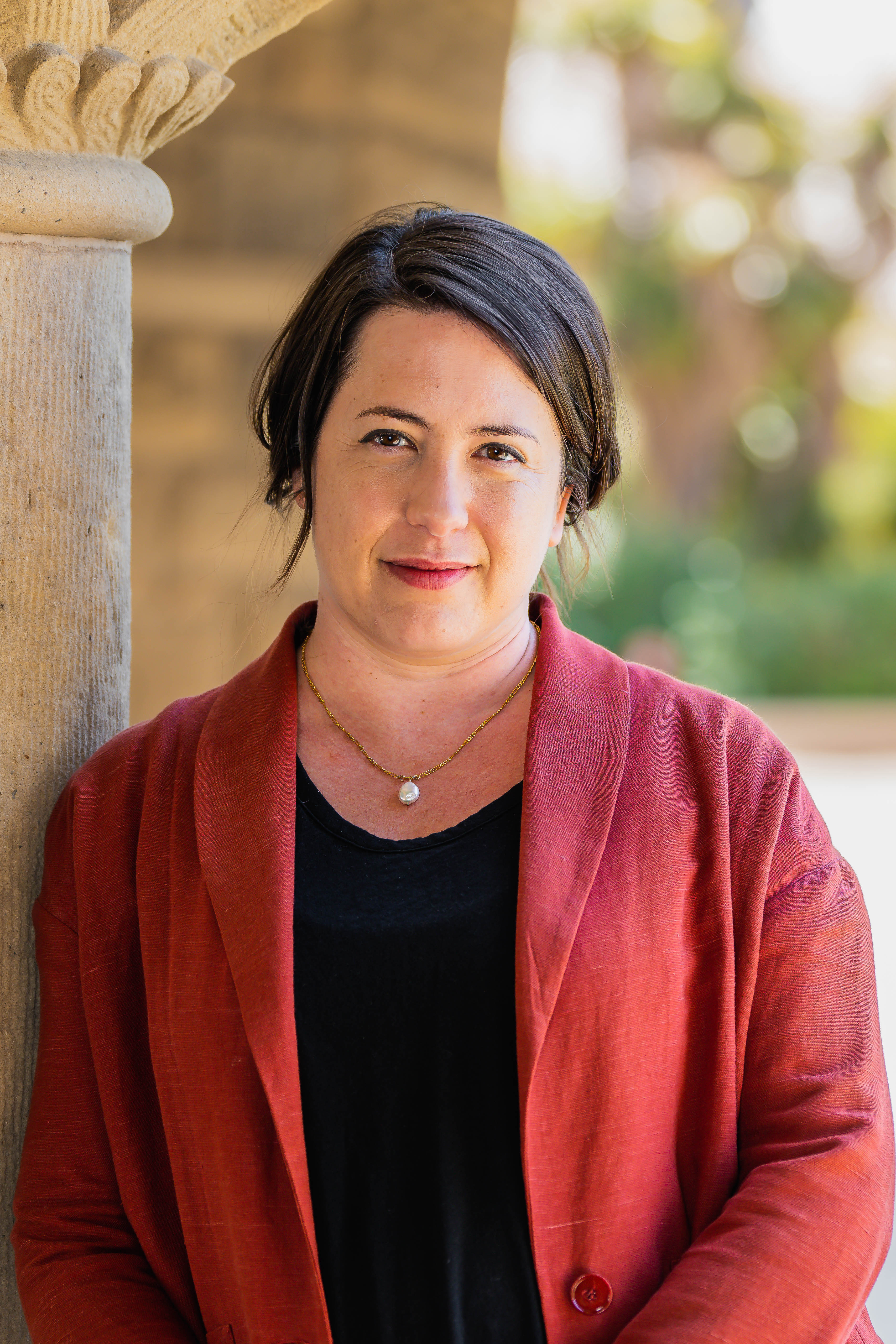
Christin is an associate professor of communications at Stanford University and a senior fellow at the Stanford Institute for Human-Centered AI. According to her, “we are all content creators now.” We may not all be influencers or podcast hosts, but “We are all putting content out there and creating a public persona,” says Christin. In the digital age, “that plays an increasingly important role in hiring, promotions, and of course, getting laid off.”
In this episode of Think Fast, Talk Smart, Christin and host Matt Abrahams explore how to navigate the creator economy — whether as a full-time influencer or a professional managing your online presence. From building on your area of expertise to understanding the trade-offs between short-term hype and long-term trust, Christin explains what it takes to show up online without losing yourself in the algorithm.
Episode Reference Links:
Connect:
- Premium Signup >>>> Think Fast Talk Smart Premium
- Email Questions & Feedback >>> hello@fastersmarter.io
- Episode Transcripts >>> Think Fast Talk Smart Website
- Newsletter Signup + English Language Learning >>> FasterSmarter.io
- Think Fast Talk Smart >>> LinkedIn, Instagram, YouTube
- Matt Abrahams >>> LinkedIn
********
Thank you to our sponsors. These partnerships support the ongoing production of the podcast, allowing us to bring it to you at no cost.
Strawberry.me. Get 50% off your first coaching session today at Strawberry.me/smart
Join our Think Fast Talk Smart Learning Community and become the communicator you want to be.
[00:00:00] Matt Abrahams: We are all part of the creator economy. We're all creators. My name is Matt Abrahams and I teach Strategic Communication at Stanford Graduate School of Business. Welcome to Think Fast Talk Smart, the podcast. Today I look forward to speaking with an Angèle, Christin. Angèle is an associate professor of communication and sociology at Stanford University, along with being a senior fellow at Stanford's Human-centered AI Institute. Her work examines the social impact of algorithms and AI. She's the author of several books with a new book coming out in fall of 2026. Well, welcome Angèle. I am thrilled to learn from you today. Thanks for being here.
[00:00:41] Angèle Christin: Thank you for inviting me.
[00:00:42] Matt Abrahams: Yeah. Shall we get started?
[00:00:43] Angèle Christin: Yes, absolutely.
[00:00:45] Matt Abrahams: Your research looks at how metrics drive creators towards spectacle and drama. Can you share some insights and examples of this drama driving and the tension it creates between authenticity and performance?
[00:00:58] Angèle Christin: So for me, that's so interesting. Just taking a step back, when you think about media production historically, uh, if you think of print, newspapers, book writers, that kind of production, people didn't have any idea about what their audience really wanted. So they didn't have metrics, they didn't have data, and they certainly didn't have the kind of fine grain granular data that creators have today. So now you have this kind of like wave of metrics coming at you, and you have a very clear sense of what people are really spending time on.
[00:01:30] And turns out when you're a creator and when you look at these kind of granular metrics, one thing that you realize very quickly is that viewers, listeners, followers, typically spend more time engaged and are more likely to watch, and the content you create is more likely to go viral, when there is some drama by which I kind of read, this term kind of refers to interpersonal kind of conflict or inflammatory kind of back and forth or kind of comments and response typically with other creators, that's gonna be great for you because you can also bring in the audience of the other creator, right?
[00:02:08] So that kind of conflict, or somewhat extreme content, again, depends on what kind of content you post, but if you push a boundary of what you do, so for example, let's say you are a nutrition influencer and you're gonna start proposing or offering like very extreme diets, right? That are really kind of out there in terms of what you can consume. Typically, that's gonna come with like more engagement, right? And higher metrics. So that's the incentives. Now the problem though is that perhaps as a creators, you don't always want to follow these incentives. And so we go back to the first part of your question, which is how do creators navigate this tension between, on the one sense, on the one hand, the pressure to create contents that kind of is more drama heavy or more extreme.
[00:02:58] And on the other hand, what their audience originally really liked them for, which was their relatability, their authenticity, their very unique editorial line. And so that kind of back and forth between kind of drama and extreme content on the one hand, and relatability and authenticity on the other, is something that every single creator is struggling with. You can think about it as a trade off between the short term and the long term, right? So in the short term, if you optimize for kind of metrics and you really push drama, conflict, inflammatory, and extreme content, you're gonna get spikes in the number of views and the kind of virality of your content.
[00:03:39] But then perhaps in the long term or the middle term, some of your loyal followers and subscribers are gonna be like, I don't really recognize the person, the creator, the tones, the voice that I used to love. And so perhaps I'm not going to come back. And every single creator I talk to over the past six years experiences some version of the tension. But at the end of the day, they have to pay the bills, right? They have to pay the rent. And so many of them, whether they want it or not, end up at some point prioritizing drama or extreme content.
[00:04:12] Matt Abrahams: So the algorithm and the way in which creators get rewarded, financially and with followers, et cetera, is to be more dramatic, even though in some cases can pull them away from their authentic, original purpose. Let's take a step back from creators, influencers, and let's just talk about professionals in general. I mean, having a social media presence is important. It's how we define to the broader world who we are, what we do. It could set us up for other positions, can provide other opportunities to us. Do you have advice and guidance on how everyday professionals can navigate the pressure to build a credible online reputation while not falling victim to this drama?
[00:04:55] Angèle Christin: This is such an important point, and actually this is where in my book I kind of end, which is that really we are all content creators now, not only when doing a podcast, but just even just as workers, as everyday human beings, we are just all putting content out there and creating a public persona that then plays an increasingly important role in hiring, promotions, and of course, getting laid off and fired for things that may or may not have caught the attention of your employers. As the dynamics of social media creations really come for the rest of us, what are some of the key aspects that, you know, I think we can translate from influencers and content creators to everyday social media users. I think the first one is that you really have to build on your area of expertise, and that is something that cannot be faked, you know?
[00:05:47] In order for your audience to trust you, you have to come up with a kind of core competency, a core area, and a specific kind of angle on this core area that is specifically yours, right? Now, it may seem easy, but as anyone who's done kind of a bit of strategy or a bit of thinking, kinda reflectively about what is my career of expertise, it's really not an easy process. And I think that for a lot of people as a negotiate kinda social media presence, it's very much a back and forth, right? Between, I thought it was this, but perhaps it's not. And kind of it's co-constructed with the audience in many ways. So that's, I would say that's the first thing, figuring out what's the area, what's the topic, what's the angles that you feel comfortable and an expert on, and really pushing that on social media.
[00:06:35] My second take is again, that when it comes to drama and extreme content, these are extremely problematic things to engage in. When you look at content creators and having spent six years talking with them and interviewing them, following them, and kind of seeing how they work, they over time develop a very thick skin for getting harassed, bullied, insulted on social media. An extremely painful process for many of them. I will add, especially for any kind of marginalized identity, you are just much more likely to get harassed online. It comes with a lot of distress, a lot of anxiety, a lot of fear.
[00:07:17] And so I think that for people who may not want to go on that specific emotional journey of developing that extremely thick skin when it comes to kind of social media presence, my second recommendation is always be aware that anything you post online is likely to be seen by your coworkers, your employers, or future clients, customers, employers, et cetera. And just trying to keep that in mind, especially when you are on your phone, perhaps late at night and being like, oh, I'm gonna weigh in. I have an answer ready for this. And just thinking that social media is not only that anymore. I mean, increasingly as we spend more and more time online, this is basically your professional window and your professional facade for potential employers.
[00:08:04] Matt Abrahams: I think that last point is really important. How you show up on social media is how people see you, and you have to manage that and navigate through that very carefully. I like your suggestion to lean into your expertise and to be forewarned that when you put your thoughts and self out there, that there will be people who will comment on that, and that commenting can be hurtful, painful, and upsetting at times.
[00:08:29] You have a unique perspective, and you've mentioned this a couple times, on how you do your research. You have a unique perspective on storytelling in that you conduct ethnographic research that results in people telling you their stories, and then you in turn tell their stories to others. But you also look at how stories help build an online presence in creators and influencers. So you're looking at storytelling and using storytelling. So given your different perspectives on it, I'm curious, do you have any guidance on what goes into crafting a good story?
[00:08:59] Angèle Christin: That is such a good question. So it depends really on what you mean by a good story, right? And what's the purpose of the story? And that's where I think I distinguish between, in academia, you are using stories, but it's always stories at the service of, in my case, I'm a sociologist by training, a broader kind of argument about how the social world functions, right? And so in my research, I really take these individual stories, I try to understand how people see the world, and then I build on that to identify what are structural forces that shaped how this specific constraints and difficulties that they encounter come into being.
[00:09:43] And so, you know, in the case of social media influencers, for example, all social media creators see themselves as fearless entrepreneurs, the rhetoric of entrepreneurship is very strong for them, which makes a lot of sense. And often they come to social media creation because they're dissatisfied with nine to five jobs, to put it bluntly, right? So there's a strong dissatisfaction with kind of modern corporate employment as a way of making a living. What's interesting though, and this connects to the story thing, is that at the end of the day, yes, they're entrepreneurs in one sense, but really they work for social media platforms.
[00:10:19] Social media platforms are the one owning the means of distribution of their content and, and that's something that a lot of creators can have a lot of trouble grappling with, right? And so in my case, I'm like, okay, so let's take these individual stories and then connect that to the broader patterns of who owns what. And who is truly making money from what? And when I think of how creators themselves tell stories, I mean typically it's gonna be stories that inspire, right? And so that's a different purpose I think, in what's the role of a story. And again, there like part of the dynamic is creating connection with the audience, right?
[00:10:58] By providing some sense of vulnerability, by sharing one's experience, by showing how you overcame difficulties, by showing that you're relatable, that you're authentic, that you're putting yourself out there, and then building on that experience to claim expertise, a specific type of expertise that can be called confessional in a way, right? Where you build on your own difficulties, your own kind of hard times to show how you overcame that and encourage your followers to do the same thing.
[00:11:29] Matt Abrahams: Well, it seems to me that from the academic sense, you're using stories as data that you can then extrapolate patterns and connections. The stories that the people you study are using are stories about connection, about being vulnerable. At the end of the day though, in both cases, there's a purpose behind the story. The story serves a purpose. The story does serve to connect, in some cases, academic ideas together, in other cases, audiences together. But you really need to understand your audience and the purpose. And then you need to be able to take that content and articulate it in a way that motivates the audience you're speaking to and, uh, elucidates what it is you're looking for.
[00:12:11] Angèle Christin: I think a great way of putting this would be to say that stories really are bridges, but the question is like they're bridges from what to what.
[00:12:18] Matt Abrahams: Exactly right. So stories serve as bridges to, to fulfill a purpose. I have always been fascinated by ethnographic research. I've never done it myself. I've always been much more of a traditionalist in the research I do, but I really like the richness the insight that ethnographies bring, and I've always appreciated that line of research. If you were to give somebody advice today who wanted to become a creator or wanted to enter into this economy, what would you advise? What would be the things that you would say you should consider and do?
[00:12:47] Angèle Christin: I would say a couple of things. First, I would say that the reality of social media labor is much harder than what some of the curated images or curated accounts that leading social media celebrities provide. It's a hard job. It's a job where you are alone day after day, shooting and reshooting content, where your employer or your primary interlocutor is the algorithm of social media companies, and it's a hard boss to please as many influencers can testify. It's changing all the time. The formats are changing all the time. The preferences of audiences are changing all the time, so you have to be extremely nimble. With that in mind, what would be my concrete recommendation?
[00:13:32] The first one is almost all creators have one primary platform, but the ones who do better typically work across platforms, and so trying to have different income streams so that you're not directly weathered and only weathered to one platform that could go under or could completely change its algorithms or its content moderation guidelines, I think is a really important part of the game. So just spreading your kind of portfolio and your content across different platforms, including newsletters, blog posts, websites, just really trying to have as large a footprint as you can. So that would be my first thing.
[00:14:11] My second recommendation is that, again, it's complicated to only be dependent on platform payments because you are gonna be incentivized to engage in more drama or more extreme content, so that's not great when it's the only way in which you make money. What works better in my experience is again, people who have different revenue streams. So you do, yes, some platform payments, but also some sponsored content where you work with brands and you are transparent and selective in the brands you work out with so that it matches the identity of your production. And again, you do that, but not too much either because if you do too much sponsored content, then suddenly you look like you are inauthentic and you are shilling for the brands.
[00:14:55] Matt Abrahams: This idea of expectation setting for yourself and the expectations of the work that's required. Not a week goes by where people don't come to me and say, hey, I'd love to start a podcast. What you do is so great. And then when I explain the amount of work and the detail and the issues, people are like, ah, that sounds like a lot more than I was signing up for. And this idea of diversity of ways that you do your job and how you get paid. Because at the end of the day, for many people, the creator economy is the way they get their work done.
[00:15:22] Well, this has been a fantastic conversation. I appreciate it. Before I end, I like to ask everybody three questions. One I make up just for you and the other two I've been asking for a long time. Are you up for that?
[00:15:30] Angèle Christin: Yeah, for sure.
[00:15:31] Matt Abrahams: Excellent. Beyond all the work you do that we've discussed, you work for Stanford's Human-Centered AI Institute, what is one thing going on there that has you really excited?
[00:15:41] Angèle Christin: Generative AI is everywhere. There is a lot of hype. There is also a lot of fear. There are many emotions surrounding generative AI and what it's gonna mean for all of us. In the coming years and decades. I am starting a new project on the emotions surrounding generative AI. So hopes, fear, the hate, the disappointment, all the emotions, positive, negative, that are shaping how humans are interacting with AI. And Stanford's, HAI Institute has been such an amazing place to really have these kind of in-depth discussions with computer scientists, engineers, scientists, and policy experts in trying to tease out what are some of the ramifications of these technological developments that are happening as we speak.
[00:16:32] Matt Abrahams: There's so much talk about the information that's part of these AI LLMs, not a lot have I heard about the emotion piece, so I really look forward to that research that you're conducting. Question number two, who is a communicator that you admire and why?
[00:16:47] Angèle Christin: I think Greta Thunberg, just because I think as a question of global warming and sustainability is a really hard one to get for the news cycle and for the news media in general, just because there is no big event except when there is a heat wave. But otherwise, it's just this long kind of unfolding process that's happening over hundreds of years. So it's really hard to muster attention for it. And I think that's exactly what Thunberg has been doing in a variety of ways, but just really to crystallize our of collective attention around how pressing the question of global warming is. And so that's something that I find really impressive.
[00:17:26] Matt Abrahams: The ability to keep constant attention on an important issue when there isn't some big event, absolutely. Final question. What are the first three ingredients that go into a successful communication recipe?
[00:17:38] Angèle Christin: Storytelling. Clear deliverables. And I will add, because at the end of the day, I am an academic, rigor. Being careful and thorough in how you link the different steps together and not overtaking or making conclusions that really do not make sense given the data you have.
[00:17:57] Matt Abrahams: I wouldn't expect nothing less from you, somebody who uses ethnography as a means to do the work you do. So story, making sure that story is rigorous and the deliverables are clearly defined. Well, thank you for the insight and input you gave regarding creators. We are all creators in some way, shape, or form, and the issues that you bring up are important for all of us to think about in terms of how much we want to open ourselves up for the tension between authenticity and the algorithms. Really provocative and really informative. Thank you.
[00:18:29] Angèle Christin: Thank you so much for having me.
[00:18:32] Matt Abrahams: Thank you for joining us for another episode of Think Fast Talk Smart, the podcast. To learn more about the impact of social media, algorithms and AI on your communication, listen to episode 225 with Adam Aleksic. This episode was produced by Katherine Reed, Ryan Campos, and me, Matt Abrahams. Our music is from Floyd Wonder. With thanks to Podium Podcast Company. Please find us on YouTube and wherever you get your podcasts. Be sure to subscribe and rate us. Also, follow us on LinkedIn and Instagram and TikTok. Check out fastersmarter.io for deep dive videos, English language Learning content, and our newsletter. Please consider our premium offering for extended Deep Thinks episodes, AMAs, ask Matt anythings, and much more at fastersmarter.io/premium.