261. Meetings With a Point: How to Design For Better Decisions
How to design meetings with purpose so they actually move work forward.


Meetings are a necessary part of work. But for many people, they’re also a major source of frustration. According to Rebecca Hinds, meetings don’t have to feel like a drain—better meetings start when we stop treating them as a default and start designing them with intention.
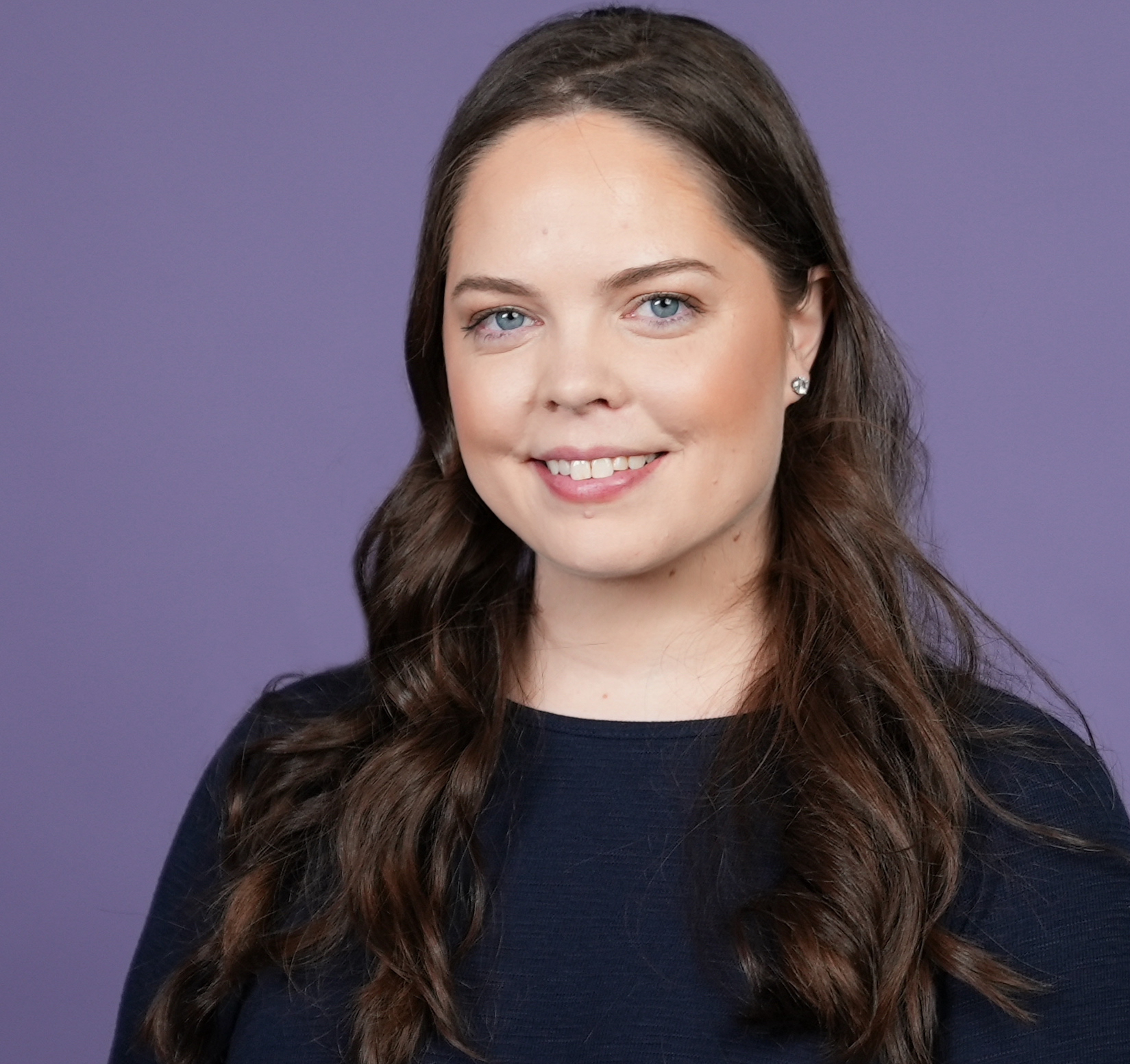
Hinds is the author of Your Best Meeting Ever: Seven Principles for Designing Meetings That Get Things Done, and a future-of-work expert who founded the Work Innovation Lab at Asana and the Work AI Institute at Glean. She argues that the problem isn’t meetings themselves, but the sheer number of poorly designed ones, and by being more thoughtful about what actually deserves synchronous time, teams can redesign how they communicate in the workplace “Meetings are the most important product in our entire organization, and yet they’re also the least optimized,” she says. “The first step is recognizing we need to be much more intentional about how we're designing meetings.”
In this episode of Think Fast, Talk Smart, Hinds and host Matt Abrahams discuss why meetings so often go wrong—and what it takes to make them work. Whether you’re leading a team, trying to protect focus time, or simply hoping to spend less of your week in calendar invites, Hinds offers practical frameworks for designing meetings with purpose so they become a tool people actually value.
To listen to the extended Deep Thinks version of this episode, please visit FasterSmarter.io/premium.
Episode Reference Links:
- Rebecca Hinds
- Rebecca’s Book: Your Best Meeting Ever
- Ep.124 Making Meetings Meaningful Pt. 1: How to Structure and Organize More Effective Gatherings
- Ep.125 Making Meetings Meaningful Pt. 2: Key Ingredients for Effective Meetings
Connect:
- Premium Signup >>>> Think Fast Talk Smart Premium
- Email Questions & Feedback >>> hello@fastersmarter.io
- Episode Transcripts >>> Think Fast Talk Smart Website
- Newsletter Signup + English Language Learning >>> FasterSmarter.io
- Think Fast Talk Smart >>> LinkedIn, Instagram, YouTube
- Matt Abrahams >>> LinkedIn
********
Thank you to our sponsors. These partnerships support the ongoing production of the podcast, allowing us to bring it to you at no cost.
This episode is sponsored by Strawberry.me. Get 50% off your first coaching session today at Strawberry.me/tfts
Join our Think Fast Talk Smart Learning Community and become the communicator you want to be.
00:00 - Introduction
01:42 - Why Meetings Feel Broken
02:57 - The Default-To-Meeting Problem
03:50 - Treat Meetings Like A Product
05:10 - Meeting Doomsday Reset
06:40 - The 4-DCEO Test
08:43 - Designing Better Meetings
10:05 - Creating a Meeting Agenda
12:58 - Context And Meeting Fatigue
14:06 - Memo-First Meetings
16:11 - The Final Three Questions
21:02 - Conclusion
[00:00:00] Matt Abrahams: What if people actually thanked you for the meetings you ran? My name's Matt Abrahams and I teach strategic communication at Stanford Graduate School of Business. Welcome to Think Fast Talk Smart, the podcast. Today I look forward to speaking with Rebecca Hinds. Rebecca's expertise is in the future of work and how to help make work better. She founded the Work Innovation Lab at Asana and the Work AI Institute at Glean. Rebecca is the author of Your Best Meeting Ever: Seven Principles for Designing Meetings That Get Things Done. Welcome, Rebecca. I'm super excited for our conversation. This is a topic that's really important to me.
[00:00:39] Rebecca Hinds: Thanks so much, Matt. I'm really looking forward to the conversation.
[00:00:42] Matt Abrahams: Shall we get started?
[00:00:42] Rebecca Hinds: Let's do it.
[00:00:43] Matt Abrahams: Awesome. I wanna start by sharing a secret about something that just happened. I had a meeting cancel and I was thrilled. I know I'm not alone. I'd like to begin by level setting. Why do people dislike meetings so much and why are meetings so broken?
[00:00:57] Rebecca Hinds: It's such a great question because it's not so much that people hate meetings, it's people hate bad meetings, and we have too many bad meetings. Often we love a good meeting, and there are a few things that energize us and inspire us more than a good meeting. The problem is those are too rare in so many organizations. And so, we've developed what I call a meeting suck reflex, where there's this visceral reaction that we have to the phrase meetings, the idea of a meeting, going to a meeting. And that's again, rooted in the fact that we know bad is stronger than good, negative emotions and experiences have a much greater impact on us than positive ones. And because of this, there's this aura of negativity around meetings. And when you look at some of the research, it's fascinating to see that when people rate their meetings in public, they tend to rate them much more negatively than in private. And that's because there's all this social conditioning around the idea of a meeting as negative.
[00:01:58] Matt Abrahams: I, I know we're gonna talk about things we can do to make meetings go better, but I'm wondering if we just call them something else, does that make us feel a little better if we just say, Hey, let's have a collab or a standup, instead of actually using the word meeting?
[00:02:09] Rebecca Hinds: Rooted in a lot of this is this default reaction we have to schedule meetings. So it's a paradox, right? Because we know they're inefficient, we dread them on so many occasions, and yet our knee jerk reaction is to use them whenever we have a problem, whenever we need alignment, if we're unclear on next steps. And so part of this is we're so accustomed to using a meeting as a communication tool, even when we have other things called Slack or Asana that often are much more efficient ways to communicate, we default to the meeting. And there are a whole host of different psychological reasons why we're so obsessed with using meetings in our workplaces.
[00:02:51] Matt Abrahams: In the consulting work I do, one of the first things I'll do is a communication audit of a company, and the first place I go is, what are the meetings you're having? How many meetings? Who's going to those meetings? Because as you said, there's sort of a default knee jerk reaction to fixing any communication problem, and there are certainly places where meetings make a lot of sense, but people throw meetings as like a bandaid to fix a bigger problem. So let's solve it. What are some ideas, top three ideas, for example, that we could use to improve meetings?
[00:03:18] Rebecca Hinds: Sure. So the premise of the book, Your Best Meeting Ever, is the idea that we need to be treating meetings as a product. Meetings are the most important product in our entire organization, and yet they're also the least optimized. And so the first step is recognizing we need to be much more intentional about how we're designing meetings. We can schedule them with just a couple clicks. That doesn't mean we should be. And so that intentionality is really important and I think the first step.
[00:03:47] Matt Abrahams: Just because you can, doesn't mean you should.
[00:03:49] Rebecca Hinds: Exactly. Because they're so expensive. They're the most expensive communication tool we have. No other communication tool requires everyone to be synchronously in person, coordinating schedules, real time conversation. They're immensely expensive, not just in terms of, you know, the payroll costs, but also in terms of the mental load that they often consume.
[00:04:11] Matt Abrahams: That idea of expense is really interesting because when we just do it because it's easy, but when you think about the cost, not just financially, but in time and focus, it really is one of, as you said, the most expensive way to bring people together. Are there other things we can do besides being intentional?
[00:04:27] Rebecca Hinds: Yes. Often I'll be brought into an organization when meetings are just so broken that these surface level fixes aren't going to work, and certainly meeting audits aren't going to move the needle in terms of truly resetting the culture within the organization. So I've ran many, of what I call, meeting doomsdays. So a meeting doomsday is essentially a 48 hour calendar cleanse where you delete your recurring meetings for 48 hours. Ideally, you do it as a team, and ideally, in the best case, you do it as a organization. And after those 48 hours have elapsed, employees are instructed to rebuild their calendar from scratch.
[00:05:09] So determine which meetings are worth bringing back to the calendar and in whatever design they think is gonna be most valuable for the work at hand. So think about the length, think about the cadence, think about the attendees, and rebuild your calendar from scratch. And we find that type of full reset is much more powerful than a meeting audit because it empowers you to wipe the slate clean, start with a fresh slate. You're not in the mindset of defending the meetings already on your calendar. You're really starting from a fresh slate.
[00:05:41] Matt Abrahams: I love this idea of a calendar cleanse. Are there certain criteria you advise people to follow as they're thinking about building back their calendars in terms of importance, frequency? What are the questions we should think about?
[00:05:54] Rebecca Hinds: In the book, I talk about this idea of the four DCEO rule, right? What actually deserves to be a meeting. We have so many status updates on our calendar, broadcast meetings, information exchanges that shouldn't be on our calendar, and so the four DCEO test is essentially a two-part test to determine whether a meeting should exist on your calendar. So first is the four D test. A meeting should only exist if the purpose is to decide, debate, discuss, or develop yourself or your team. Now you'll notice what's not on that list. Broadcast updates, boss briefings, information exchange, status updates. Those don't pass the four D test. Now, even if the content of a meeting passes the four D test, it still needs to pass the second part of the test, the CEO test. So a meeting should only be scheduled if the purpose meets one of the following criteria. So it should be complex. The content should be complex enough where we can't efficiently exchange it in advance.
[00:06:55] It really does require bringing everyone together, synchronously, to bounce ideas off of each other, iterate, build on top of one another. E, is it emotionally intense? So if it involves managing emotions or interpreting emotions, you're giving hard feedback or a performance review. It's no longer just about facts, it's about feeling. Empathy is really important, reading body language. And then, O, is it a one-way door decision? So this comes from Amazon and Jeff Bezos, where they essentially said one-way door decisions are decisions where once you walk through the door, it's very difficult, if not impossible, to go back the other direction. And in those cases, the cost of misalignment is so high, it's so risky, where often you wanna have a meeting to ensure at everyone's on the same page.
[00:07:44] Matt Abrahams: Everybody knows I love a good acronym, and this is a very useful one. So the four Ds, decide, debate, discuss, or develop employees, and that's not enough. Even if you meet that bar, then it's is it a complex decision? Are emotions involved? And is it a one-way high stakes choice? If it meets those criteria, then we put it on the calendar.
[00:08:05] Rebecca Hinds: Then we put it on the calendar. But we do so very intentionally and we think about various dimensions of the meeting. I think there are four in particular that are important to think about. One is the length. We often default to 30 to 60 minute entries on our calendar. A lot of that is because those are the default settings of these calendar tools. We need to think much more intentionally about the length of meetings. The cadence is also important.
[00:08:29] So one of the things we see consistently with these meeting resets and doomsdays, people will start to think carefully about whether that weekly meeting needs to be a weekly meeting. Can it be a monthly meeting? Can it be a quarterly meeting? And so the cadence is really important. The attendees, so thinking about who absolutely needs to be in the room. Often we tend to over invite. And agenda items. So think very carefully about the items you're putting on the agenda, because that can be another source of meeting clutter and meeting bloat within organizations. Too many agenda items or agenda items that don't really move the work forward.
[00:09:06] Matt Abrahams: I really like that thought process as well. Let's look inside a meeting. You talked about agendas. Do you have any advice on how to structure agendas? Clearly you said not too many items. I have a personal pet peeve. I really don't like when meetings start by reviewing the previous meeting. 'Cause I often don't like having been in the previous meeting. So to remind me of that meeting now sort of sets me in a negative place. I do understand that reviewing previous work is important, but maybe not the first thing. Do you have suggestions for what happens in the meeting?
[00:09:35] Rebecca Hinds: Well, again, I think that's a form of information exchange and probably can be handled effectively asynchronously before the meeting. So my favorite strategy for agendas is to think about each agenda item as a combination of a verb and a noun. Often agenda items are laundry list items that are thrown together haphazardly. There's research to suggest that about 50% of agenda items I think are recycled from the previous week. So again, we're not being intentional about how we're designing the meetings. So instead of saying team discussion, frame it as a verb and a noun. Decide this noun, align on this. And that also has the added benefit of determining whether that actually needs to happen in the meeting. Because if you can't transform something into a verb, it probably doesn't deserve to be in the meeting.
[00:10:25] We know that disproportionately more time is spent on the earlier items in the agenda list. So, put your most important topics, typically, up on the agenda item list. Sometimes you might want to have some sort of less cognitively taxing item to warm people up, but in general, you also should think about the ordering of agenda items. Agendas also suffer from what's called the law of triviality, which means that essentially we're more inclined to spend disproportionately high time on the things that are easier. The agenda items that are less cognitively taxing. So another word for this law is called bike shedding. And that term bike shedding comes from an old story around two agenda items that were essentially different in terms of the cost associated with the agenda items.
[00:11:19] One was a nuclear power plant that was millions of dollars. And the second was a bike shed that was, I think a thousand dollars. It was in Britain, so it was in pounds. And essentially what they found is most of the conversation focused on the bike shed because it's much easier to start to think about, okay, what colors should the wall be? Should there be a light in the bike shed? Versus the nuclear power plant is much more cognitively taxing. It's much easier to skip that item, default to the person who has the best proposal, and avoid those tough conversations around the risky and cognitively taxing topics. So again, this intentionality is really important when we think about agenda items as well.
[00:11:59] Matt Abrahams: You taught me about bike shedding, but I've seen it happen in the meetings I've been in where we spend time on the trivial matters. So I heard a couple things there. I love the idea of leading with a verb, and I think this is important not just in agenda items, but in how you title meetings. Because you can set people's expectations just in the meeting title. And people have heard me say this before, I think the calendar invite is the most underutilized expectation setting tool.
[00:12:21] You can do it by what you call it, as you said earlier, about how long the meetings are. And this idea of thinking about cognitive effort for the agenda item. So what I heard you say is perhaps start with something that's less cognitively burdensome at first, just to get things moving, but then pretty soon after the more intense or important issues, and then save the ones that might be a little less intense for the end.
[00:12:44] Rebecca Hinds: In general, yes. Again, thinking about systems thinking, it's also important to consider, you know, have you had a heavy meeting day prior to that? Are you already cognitively taxed? Is the meeting happening at the beginning of the day or after lunch, or at the very end of, you know, a Friday? And so thinking holistically also about, okay, what is the context that people are walking into as they're walking into this meeting?
[00:13:07] Matt Abrahams: That is such an important point. We tend to fixate on our meeting and not the experience of the people in the meeting. And if this is my fifth meeting of the day and this is important work, maybe it's better to move the meeting to the following day. So as architects of meetings, we also have to consider how our participants are coming to us, and that I think amen and exclamation point to that.
[00:13:30] Many people might have heard at companies like Amazon, and I think Twitter did it as well, where everybody shows up with a written document and the first part of the meeting is reading the six pager or whatever. Do you have thoughts on that? I can see the benefit of alignment, because the reality is I ask my students to do homework and some show up having done it and some don't, and then all of a sudden I'm teaching a class where not everybody's on the same page, literally. What do you think about that?
[00:13:53] Rebecca Hinds: I think in general it's a very healthy practice. We see so many instances of people showing up unprepared for the meeting, and what they've done there is they've raised the bar in terms of what actually deserves to be a meeting. You can't schedule the meeting unless the memo has been written and is thoroughly thought through. And these are memos that often take days or even weeks to produce. And Jeff, you know, his mentality was if you couldn't take the time to flesh out your thoughts in a memo, you don't deserve to hijack people's time in a meeting. Now, I don't think every meeting should start with a written six page narrative memo.
[00:14:31] But I do think for the ones where there needs to be context setting, where it involves a lot of complexity, it can be a really healthy practice. The other thing that Amazon did with this memo culture is the study hall. So you would start the meeting independently reading the memo, making notes and if you read the memo, left your notes, and you had nothing left else to contribute, you were invited to leave the room. And I think that's another healthy practice because it again, starts to be more intentional about how we're designing the meeting with an asynchronous component that people can participate and then leave before they're wasting time synchronously in a meeting where they've already contributed their thoughts and perspectives.
[00:15:12] Matt Abrahams: I had not heard of the study hall idea, but I really like it. I am very excited to put into practice a lot of these things you've said. I do think that everybody's meetings can benefit. Before we end, I'd like to ask you three questions. One I'm gonna make up just for you, and two, I've been asking people for a long time. Are you up for that?
[00:15:29] Rebecca Hinds: I'd love it.
[00:15:30] Matt Abrahams: I'd like to give you a catharsis moment. Share with me what is one of the things that just bothers you the most about meetings and maybe provide a solution to help.
[00:15:39] Rebecca Hinds: So I think what we've talked about in terms of using meetings as a default solution and the duct tape for all of our problems in the workplace, I think what annoys me most is showing up to a meeting where it's clear there hasn't been design and intentionality going into that meeting. And so I think tools like the four DCEO test, treating meetings like a product, thinking about user-centric design, who is the audience, can be effective at helping to minimize that tendency, that we know is human nature, to use meetings as this cure all solution in the workplace.
[00:16:15] Matt Abrahams: I had a catharsis just listening to you say that. It was like, yes, those all, we need to fix all of that, so thank you. Question number two, who is a communicator that you admire and why?
[00:16:25] Rebecca Hinds: We talked about Jeff Bezos at Amazon, and when it comes to meetings, I have been really inspired by everything he's done over many years, decades. And his influence continues to be felt at, at Amazon where we did that collaboration cleanse. I think him raising the bar in terms of what deserves to be a meeting, he thought very carefully about the design of meetings. So often he would leave a chair empty in the physical meeting room to symbolize the customer, the idea that we should always be thinking about the customer voice in our meeting.
[00:16:59] That's inspired a lot of my thinking around hybrid and virtual meetings and creating some physical presence of the remote folks in the physical room. He famously had the two pizza rule, as well, where you shouldn't schedule a meeting if there are more attendees than two pizzas can fill. And so I think that intentionality is something that I admire among various communicators, but in particular, various leaders at Amazon, including Jeff.
[00:17:23] Matt Abrahams: Thank you for sharing all those things, the chair to represent the customer, reminding yourself who the true beneficiary of the meeting is, really important. My final question for you, Rebecca. What are the first three ingredients that go into a successful communication recipe for meetings or beyond?
[00:17:39] Rebecca Hinds: We've discussed the importance of matching the communication tool to the purpose, and I think that holds for meetings certainly, but it holds for all of our communication. Think about the purpose of the communication, the intent of the communication, and match the tool to that aim. Second, intentionality, as we've spoken about, we need to be approaching communication as something that is intentional, is intentionally designed. That's more and more important, the more expensive the communication tool is.
[00:18:06] But absolutely, just because communication is effortless doesn't mean it needs to be in our organizations. And then third, user-centric design, right? It's easy to come into a meeting thinking about, what do I need to say in the meeting? It's much more important to think about what do others need to understand and walk away with from the meeting. That user-centric design, designing for the audience, just as you would a product, is a hallmark of great meetings, and I think great communication in general.
[00:18:34] Matt Abrahams: Absolutely. Tailoring to an audience is critical. Making sure the tools fit the purpose and being intentional in in general. And thank you for intentionally sharing your advice for us. I know my meetings will be better as a result of what we've discussed, and I hope everybody listening will improve those meetings. Thank you so much.
[00:18:52] Rebecca Hinds: Thanks Matt. That was fun.
[00:18:55] Matt Abrahams: Thanks for joining us for another episode of Think Fast Talk Smart, the podcast. To learn more about communication and meetings, please listen to episode 124 and 125. This episode was produced by Katherine Reed, Ryan Campos, and me, Matt Abrahams. Our music is from Floyd Wonder, with thanks to the Podium Podcast Company. Please find us on YouTube and wherever you get your podcasts. Be sure to subscribe and rate us. Follow us on LinkedIn, TikTok, and Instagram, and check out fastersmarter.io for deep dive videos, English language learning content, and our newsletter. Please also consider joining our Think Fast Talk Smart Learning Community at fastersmarter.io/learning. You'll find video lessons, learning quests, discussion boards, our AI coaches, and book club.