257. Move Your Audience: Lessons From MLK You Should Use
Why it’s not about being born a great communicator, but becoming one.


The greatest communicators aren’t always great from the start. As Lerone Martin knows, even the great Martin Luther King Jr. had to practice before he could persuade.
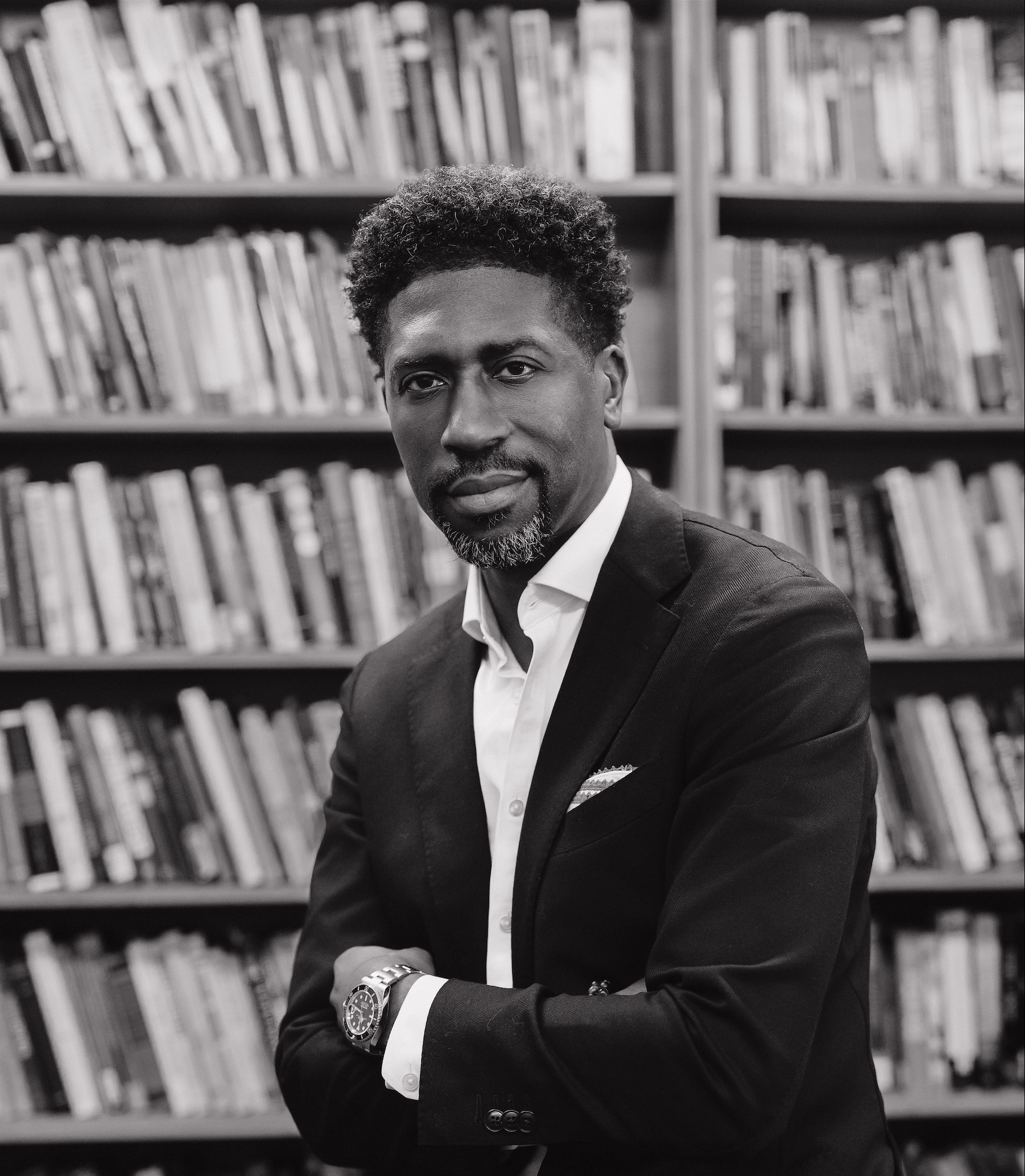
Martin is the Martin Luther King Jr. Centennial Professor at Stanford, and as director of the King Research and Education Institute, he has spent years studying how King developed his brilliant communication that continues to captivate audiences to this day. “This is a skill that Martin developed over years,” Martin says. “There are stories of him practicing in the mirror... And I think it speaks to us about how we can develop this skill over time.”
In this episode of Think Fast, Talk Smart, Martin and host Matt Abrahams unpack the techniques behind King's legendary speeches, from the musicality of his voice to his use of repetition and narrative structure. Whether you’re preparing a speech or building conversation skills, Martin highlights King’s example to show that great communication isn’t always born — it’s built.
To listen to the extended Deep Thinks version of this episode, please visit FasterSmarter.io/premium.
Episode Reference Links:
Connect:
- Premium Signup >>>> Think Fast Talk Smart Premium
- Email Questions & Feedback >>> hello@fastersmarter.io
- Episode Transcripts >>> Think Fast Talk Smart Website
- Newsletter Signup + English Language Learning >>> FasterSmarter.io
- Think Fast Talk Smart >>> LinkedIn, Instagram, YouTube
- Matt Abrahams >>> LinkedIn
********
This episode is sponsored by Grammarly. Let Grammarly take the busywork off your plate so you can focus on high-impact work. Download Grammarly for free today
Join our Think Fast Talk Smart Learning Community and become the communicator you want to be.
00:00 - Introduction
02:50 - Why MLK Was So Compelling
04:17 - MLK’s Early Speaking Struggles
05:49 - How MLK Practiced and Improved
06:44 - Favorite MLK Speech
07:58 - “I Have A Dream” and Prepared Spontaneity
10:03 - MLK’s Core Techniques
13:01 - Repetition, Rhythm, and Momentum
15:30 - Conviction vs. Performative Messaging
19:00 - The Final Three Questions
23:35 - Conclusion
[00:00:00] Matt Abrahams: Conviction and creativity are critical for successful communication. My name's Matt Abrahams and I teach Strategic Communication at Stanford Graduate School of Business. Welcome to Think Fast Talk Smart, the podcast. Today I'm excited to speak with Lerone Martin. Lerone is the Martin Luther King Jr. Centennial professor in religious studies and African American studies at Stanford University. He also serves as the director of the Martin Luther King Jr. Research and Education Institute at Stanford. His second book will be out soon. Well, welcome Lerone. I am so excited to have you here. We've known each other for a while, and we've been talking about doing this. Thanks for being here.
[00:00:40] Lerone Martin: Happy to be here.
[00:00:41] Matt Abrahams: Excellent. Shall we get started?
[00:00:42] Lerone Martin: Let's get started.
[00:00:43] Matt Abrahams: Every one of our episodes of this show ends with me asking our guests the same question, who's a communicator that they admire and why? And above all else, the two most popular answers are Michelle Obama and Martin Luther King Jr. I'm not sure of your knowledge of Michelle Obama, but I certainly know you're an expert in Martin Luther King Jr. Why do you think so many people view him as a great speaker and communicator?
[00:01:06] Lerone Martin: I think one of the things that makes Martin so fascinating and so compelling as a speaker is his ability to paint a picture. I think he was so good at taking you on a journey and painting a picture, and then getting people excited about what he was saying. And I think his ability to bring out emotion, to bring out excitement in his listeners, I think is one reason why people really gravitate to him as a preacher. And I also think his ability to use his voice almost like a musical instrument, that's the other reason that people are so moved by him. The musicality of his voice, his pacing, his tone. I'm teaching a class right now here on campus, and for some of the assignments, students actually have to listen to his speeches. Obviously, I could assign them to read them, but I tell them they have to hear it, and I want them to hear him, and I want them to hear how audiences responded. And students are still to this day, moved by his speeches. Even, you know, almost over 60 years later.
[00:02:10] Matt Abrahams: The imagery that he's able to create, the connection through that engagement and energy, and certainly the way he used his voice are all, when combined together, I think what make him so charismatic and so interesting. And these are skills we can all learn, not to try to sound like him, but these are the same levers that we can use. Speaking of public speaking in, in your new book, you look at Martin Luther King Jr's early years, is it true that he received poor grades in public speaking in Oratory?
[00:02:38] Lerone Martin: He did. I mean, they were passing grades, but they weren't a's, as you would expect. He participated in a speech contest as a high school student. He won the high school contest and then he went to the state competition and did not even place in that competition. When he got to college, he had to take a course called Composition and Reading with this legendary professor at Morehouse by the name of Gladstone Lewis Chandler. And he said that King had a great voice, but he really struggled, um, showed potential in that course. And so, he got a C in that class as a public speaker. And then he went on to seminary and took a preaching class in which he got a B. So, I think what that tells us is that this is a skill that Martin developed over years. He had a great voice, his mother taught him to sing at a very young age, so we had the musicality, but in terms of the pacing, the organization, I think this is something he developed over time. And I think it speaks to us about how we can develop this skill over time.
[00:03:42] Matt Abrahams: I'm curious, was it mostly through repetition? Did he really invest time and effort in improving his communication? Did he look to others who he admired?
[00:03:51] Lerone Martin: There are stories of him practicing in the mirror. And then when he was off to seminary, his father would have him come home every summer and take over the pulpit. So, he had those hours of rehearsing and practicing in front of people at his church. And so, he took it very seriously. And then he admired local preachers, not as much his father. He felt his father was a bit too fundamentalist and carried away too much with emotion. But he admired people like William Holmes Borders, who was a local minister at Wheat Street Baptist Church in Atlanta. And these individuals were really influential and shaped the way that he thought about public speaking. And he brought elements of their style, his own style, the musicality he was taught from his mother, and he brought all that together to produce the Martin Luther King Jr. that we know.
[00:04:37] Matt Abrahams: What I'm hearing and that I hope everybody is hearing that we can all get better. Absolutely. And even somebody that we admire and is noted for his oratory and speaking ability might not have started there, but it was through practice, having role models. You know, if you wanna be a good speaker, you gotta watch people speak, and speak yourself, and I appreciate that. Almost everybody is familiar with the eloquence of Martin Luther King Jr's. I Have a Dream speech. I actually find his Nobel Prize acceptance speech to be more rousing and better architected. Do you have a favorite speech, sermon or writing of his, and if so, what is it and why?
[00:05:09] Lerone Martin: It's a great question. It depends on what day you ask me about which speech I’ll tell you; I've been a big fan of the speech he gave here at Stanford in 1967. It's a speech called The Other America. Our Stanford Library has put it on YouTube; you can watch it. What I love is that it's about 45 minutes and he doesn't stumble once. There's no manuscript. It's all coming from his heart and mind, and it's a speech about poverty in America, and it's also a speech about racism and war. And watching him hold this audience of over a thousand Stanford undergraduates in the palm of his hand as he's delivering this speech, I find extremely moving, and I try to watch it at least once a year because I find it just so moving.
[00:05:51] Matt Abrahams: I adore the speech as well. I think it's very well done and obviously having a connection to this institution makes it special. You mentioned in there that it wasn't a manuscript. Can you share with us a little bit of the history behind the famous I Have a Dream speech. Is it true that part of that, if not most of it was extemporaneous?
[00:06:08] Lerone Martin: Yes. The, I Have a Dream part of the speech towards the end and the repetition of that is something that he had not written down that he was going to do. However, to our point earlier about practice, he had used that refrain twice prior, once in Detroit and once in South Carolina. It was a part of his repertoire, but it was a part of the repertoire that he did not plan to use that day. And I like that idea in the sense that you can have a manuscript prepared, but it's always great, I think, as a public speaker to try your best, to be attuned to the moment, to be attuned to your audience and to be open to perhaps deviating a bit in a public address.
[00:06:48] Matt Abrahams: I do a lot of work on spontaneous speaking, speaking in the moment, and one of the fundamental points I try to make is that you have to prepare to be spontaneous. An athlete does a lot of drills to prepare for the moment that is spontaneous. And it sounds like in a similar way, the I Have a Dream speech had some of those elements. He had practiced some of this but hadn't intended, and for whatever reason in that moment, felt that was the appropriate thing to bring about. And I think there's a lesson for all of us in that as well, which is you can practice, you can think through things and then allow yourself in the moment to read the room, read the space. What amazes me is that was a very big stage and a very important talk, and that he took that opportunity to be spontaneous. I think many of us would've stuck to the script that we had.
[00:07:34] Lerone Martin: But I like the way you said though, about practice, the repetition will allow you to be spontaneous. I like that. And using the metaphor of an athlete is so true. Thinking about Steph Curry and LeBron James and others, like they do what they do and sometimes it's impromptu, but that muscle memory right, enables them to do that. And I think approaching public speaking like that, I love that metaphor.
[00:07:56] Matt Abrahams: It's that practice and knowing that practice is preparing you for that is important as well. To know that in that moment I have those skills and I can rely on them is really important, there's a confidence that comes from that. As someone who's extensively studied Dr. King's writings and speeches, I'd love for you to share with us some of the techniques and devices that he would use. You've highlighted some already, but he was excellent at using lots of different oratorical and rhetorical devices to really engage. Can you share with us some of the ones that you note or pay attention to?
[00:08:26] Lerone Martin: Absolutely. And I love the way he said that 'cause he is kind of a jazz man in that he pulls from different styles. So, I think one style that we, that you know first and foremost will be the experience of the African American Baptist Church. His ability to use narrative and story from the Bible to elucidate modern points, I think was something he learned from the pulpit. Bringing pathos, bringing emotion right to his speeches, that's something he learns from the pulpit in the Black Baptist tradition. And part of that is organizing a sermon around what some African American preachers have talked about, in particular Samuel Dewitt Proctor, who went to the same seminary as King before King, Crozier Theological Seminary.
[00:09:07] And he, in a book called The Sound of the Trumpet, talked about organizing sermons along the lines of an antithesis. The world is so bad, things aren't going well, and then a thesis, but God or the Bible says this. And then ending with a synthesis about, now how are we then to live? What are we now called to do? And I think that King's structure of his sermons often followed that. The world is bad. It may be racism or poverty or war. Here's what the Bible says, and now here's how we ought to live. So, I think the structure of the African American sermon, I think the emotion of it, I think is one aspect we can look to for King.
[00:09:44] And then the other is, I think what we talked about earlier, is just the pacing and the musicality. He is so good at emphasizing certain words, slowing down, elongating certain phrases. So, I think the musicality, the tonality, I think that's another mechanism or device that he used so well. And finally, I think, you know, of course, it's the content. I love the way that he not only uses biblical stories, but King will also use examples from everyday life to really elucidate his points. And I think in providing a story, you bring your audience with you on a journey. And you are taking them somewhere. And I love the way that he does that, both using the Bible, but everyday experiences. He will use examples of his own personal life to elucidate a broader point, to connect people around their shared humanity.
[00:10:38] And I think those sorts of techniques, right? It's the musicality, it's the structure of the African American sermon, the emotion of the sermon and the ability to use narrative and storytelling I think are some of the devices he used and just made him the man that we know.
[00:10:54] Matt Abrahams: We don't have to necessarily refer to the Bible, just making any reference to some commonly understood experience or story can help. And he uses even more specific techniques that I'd love to get your opinion on. He uses a lot of alliteration where there's a rhyme in what he says. There's a technique called anaphora, which is the repetition. The I have A Dream is repeated, in his Nobel Prize speech he repeats the same phrases. And there's a sense of momentum, a sense of passion that comes in that repetition.
[00:11:22] The use of analogies is so powerful in a lot of his work. When you really dissect it, it's fascinating to see how many different techniques he weaves together. And I think for many of us, we can say that was Martin Luther King Jr. He was an expert at it. But we can all put some of this into our communication. Do you find, trying to put some of this stuff in your work, tell me a little bit about how you do that. I'd love to learn 'cause I'd like to put even more in what I do.
[00:11:47] Lerone Martin: Well, what you just said about repetition is what I try to do in my public speaking and some of my lectures, because you do get a sense of momentum. He uses it in a speech, his last actually speech on April 3rd. I mean, everyone knows the mountaintop part, but before that, he goes on this long discourse about if I had sneezed and he's telling a story about that he had been stabbed in the 1950s. It was stabbed by a letter opener by a mentally ill woman. And the doctors had told him it just missed his aorta, and if he had sneezed, then he would've not survived. And so, he uses that and says, if I had sneezed, I wouldn't have been here in 1961 when this happened. If I had sneezed, I wouldn't have been here in 1962. And it brings it all the way back up to 68 with this momentum that then say, and now here we are. And now we're going to move forward and continue the progress in American society.
[00:12:41] I love the use of repetition in that regard because it does bring your audience with you. It's almost like you're on a rollercoaster and you're going tick, tick, tick up to the top, and then you're about ready to take off. So, I like to use that. And as well as everyday experiences of shared humanity that I try to use for my students, right? So, I know that all of them are probably not sleeping well or all of them are probably eating certain types of foods or they're stressing out 'cause we're getting to the end of the quarter. I try to use those experiences to relate to the course material, to understand that this is a shared experience, that all of us are going through this together and there's a way forward. So, I think that I tried to use some of the stuff that King used as well in my lectures and my public speaking.
[00:13:23] Matt Abrahams: And I know from what the students say, it's very well received. I wanna highlight on this notion of momentum. The feeling and experience of movement that happens in really potent, powerful speeches. And I think he was a master of that. And I think all of us can tap into, it's not just talking about movement, but it's actually giving us an experience. Saying words more quickly, more slowly repeating. These are all tools that give that, and that's really, really helpful. Something else that's really powerful about Martin Luther King Jr's communication is that he was rooted in a clear purpose to achieve justice. I'd like you to step out of your role as a, as an academic teacher, how can contemporary leaders and managers ensure their messages are anchored in something that's genuine, a purpose, rather than appearing as just performative statements?
[00:14:10] Lerone Martin: Yeah, I think conviction. I think you've just; you've really got to be completely convinced of the cause that you're speaking about or the issue you're addressing. 'Cause I think in today's world, people can spot when people are fraudulent or when people are just, as you said, just performing. I think that you've gotta be completely convinced and completely convicted of what you're saying, because if you're not convinced it's gonna be difficult for you to convince others.
[00:14:37] And I think King was completely convinced about at least where he thought America could get to or where he wanted America to go. He wasn't always sure about what was the best method to get there, other than of course non-violence. But he was always convinced that what he was doing was right. And I think that's a lesson for all of us. I think we have to ourselves be convinced and convicted of what we're talking about before we can convince others. And I think that King shows us that.
[00:15:04] Matt Abrahams: That notion of conviction is really powerful. It takes reflection to get there, you have to think about what's important to me, and then the next step is, how do I manifest that in my own actions so that I'm seen as authentic. It's very easy as a leader to talk about values. It's a little more challenging to live them, to show them. I always talk with my students about credibility comes not just from telling but showing. And so, finding ways to show through the stories you tell, through the actions, through who you highlight and uplift. So, I really appreciate that notion of conviction and I challenge everybody listening regardless of your role to really think about what has you convicted, what is it that's important to you?
[00:15:42] This has been fantastic. Before we end, I'd like to ask everybody three questions. One, I make up just for you, and two are similar to everyone I've interviewed. I'm curious if you had this moment to share with younger people the importance of communication. Share with me why it's so important. I mean, you and I prior to the interview, we're talking about AI and how AI is being used, and certainly it's a wonderful tool to help with communication. But, from your perspective, somebody who studied one of the greats and many of the greats in communication, why is it so important for a young person to learn how to communicate authentically with conviction?
[00:16:14] Lerone Martin: Well, I think the first thing would be to inspire others. If we're thinking about Martin Luther King Jr. one of the things that he always said was, life's most persistent and urgent question is, what are you doing for others? And I think what he shows us is how communication can inspire others to dream. Good communication, I should say. So I think that's one thing I would tell a young adult. How do you wanna inspire others and move others and help to have an impact on the world? Great communicators can do that. Even if you have great ideas, if you don't know how to communicate them in an effective manner, the greatness of your ideas or the genius of your ideas can get lost. So I would say to a young person, if you really want to have an impact on your community, you want to inspire others, learn how to be a great communicator, and I think that you'll find you'll have an impact on your community and those around you.
[00:17:04] Matt Abrahams: Inspiration is so important and tools can't necessarily give you that, and it's not just for young people, I think all of us benefit when we think about how we inspire others through our communication. I really appreciate it. So I'm gonna modify my second question for you. I always ask people, who's a communicator you admire and why? But I'm gonna remove one from the table for you, beyond Martin Luther King Jr., who is a communicator that you admire and why?
[00:17:27] Lerone Martin: You know, I have to go with who you started with. I'll join the crowd and say that I've always been impressed with Michelle Obama. She's a great storyteller. And she can take you along on a journey, she'll make a point, and then she'll tell an amazing story that's heartfelt, that puts you in the moment. And she finds these common human experiences and say, we all know what it's like to come home from work and then be stressed about, okay, what's for dinner? Are the kids okay? Right. That takes you there. And then her conviction, she's always able to convey her lectures and her speeches with feeling. You always get the sense that this is real. So, I'm a big fan of hers.
[00:18:06] I'm also a big fan of Barack. I think Barack does a great job of reminding us, or at least attempting to remind America of our values and who we are. And calling us to something greater. I love that when Barack speaks, he's so good at painting the American story. He embodies it, as we talked about earlier, right? I mean, his own story about his family. And I love the way that he calls us into something greater. I've heard him on podcasts; I've heard him give public lectures and I think he's good. So I, I guess you could say I'm a fan of the Obama family when it comes to public speaking. I think they're very good and they're both very gifted in their own way.
[00:18:44] Matt Abrahams: Michelle Obama's ability to tell a story in much the same way that Martin Luther King Jr. Could tell a story, they tell stories differently but use them for the same purpose. To really connect, to demonstrate, to humanize, and that's a very powerful tool. Thank you for sharing that. Final question. What are the first three ingredients that go into a successful communication recipe?
[00:19:03] Lerone Martin: First three ingredients. Oh, wow. I like that. I wanna start with conviction. I think you gotta do, reflect and be convinced of your message. And then I think, of course, it's the structure, it's the format, it's this, you said the GPS, the mapping. If you're convinced to know where you want to go, now you have to then plan how you're gonna get there. And then I would say pacing. What pace do you wanna travel? Fast, slow, or moderate it? Right? Do you know where is there gonna be rest stops? There gonna be places where you're gonna park and linger a little longer. So, I think those would be the three for me. I think it'd be conviction, and I think it'd be structure or mapping, and then I think I'd say pacing.
[00:19:41] Matt Abrahams: I love the way you wrapped up that answer. A true teacher will summarize in the end. Uh, you make my job really easy. Conviction is all about your focus, your North Star. Structure is about how do I package it in a way that's meaningful with high fidelity? And then pacing is you can have a great message, but one delivered poorly isn't gonna be as effective. Thank you so much. Thank you not only for sharing your thoughts, but for also helping us dissect and better understand the importance of communication in general, but specifically around how Martin Luther King Jr. was so effective. I appreciate your time and thanks for being with us.
[00:20:13] Lerone Martin: It was an honor and a privilege. Thank you for having me.
[00:20:17] Matt Abrahams: Thank you for joining us for another episode of Think Fast Talk Smart, the podcast. To learn more about how to deliver compelling communication listen to episode 192. This episode was produced by Katherine Reed, Ryan Campos, and me, Matt Abrahams. Our music is from Floyd Wonder. With thanks to Podium Podcast company. Please find us on YouTube and wherever you get your podcasts. Be sure to subscribe and rate us. Also, follow us on LinkedIn and Instagram and check out fastersmarter.io for deep dive videos, English language Learning content, and our newsletter. Please consider our Think Fast Talk Smart Learning Community, where you can join a global community of people interested in honing and developing their communication skills. You get access to asynchronous lessons, an AI coach, quest and challenges, and much more. Join at fastersmarter.io/learning.